ConflictApril 1619

Battle of Sarhu

In 1619 Nurhaci’s Later Jin defeated, one after another around Sarhu, the Ming armies advancing along four routes and Gang Hong-rip’s Korean force. The battle reversed the balance between Ming and Later Jin.
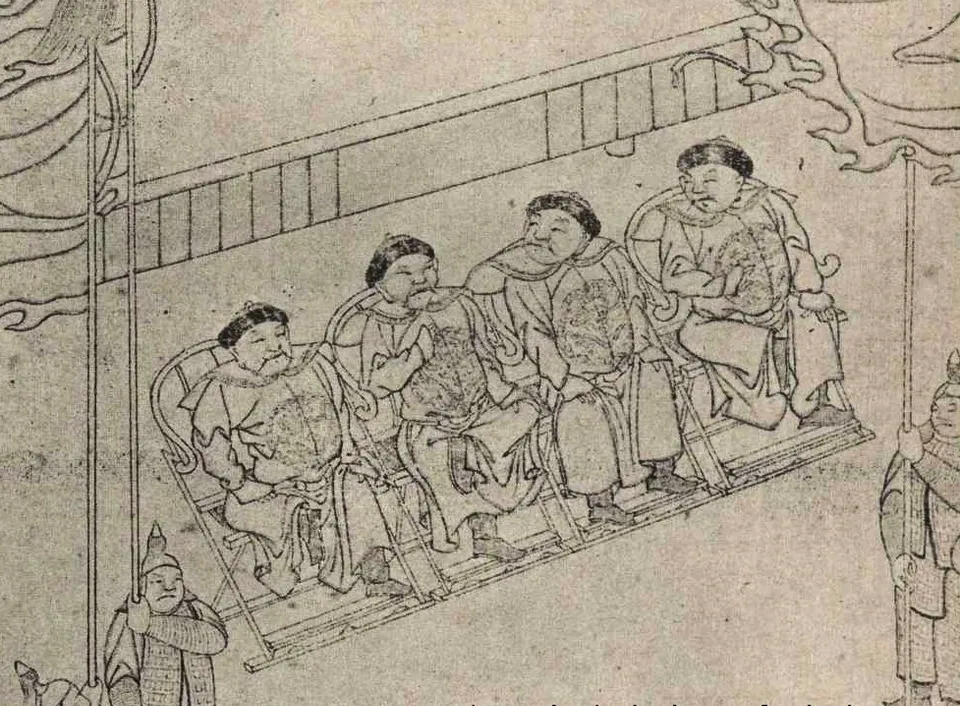
Illustration from the Manchu Veritable Records, “Gang Hong-rip leads his troops to surrender” — the Korean army surrendering to the Later Jin at Sarhu

清代作者 Template:One · CC BY-SA 4.0 · Source

After the Later Jin seized Fushun, the Ming in 1619 sent an army of around 100,000 under the supreme commander Yang Hao along four routes against the Jin capital at Hetu Ala. At Ming insistence — it had sent troops to Korea in the Imjin War — Joseon too dispatched just over 10,000 men under Gang Hong-rip, attached to Liu Ting’s eastern column.

Declaring “You come by many roads; I go by one,” Nurhaci massed his banners, first destroyed Du Song’s western column at Sarhu and within days broke Ma Lin’s northern column and Liu Ting’s eastern column in turn. The Korean army was badly beaten around Fucha (Simha), and Gang Hong-rip surrendered to the Jin with his remaining men.

The battle turned the tide: in 1621 the Later Jin took Liaoyang and Shenyang and won all of Liaodong. Gwanghaegun pursued a neutral diplomacy between Ming and Jin, but after the pro-Ming Westerners deposed him in the Injo coup (1623) and adopted a pro-Ming, anti-Jin line, the Jin invaded (the first Manchu invasion).

The map in 1619

OpenFreeMap © OpenMapTiles © OpenStreetMap contributors

States and rulers at the time
Later Jin · victor — Nurhaci
Ming · defeated — Wanli Emperor
Joseon · reinforcements — Gwanghaegun
Places
Sarhu

People

  • Nurhaci (Taizu of Qing)1559 – 1626

    commander · Jianzhou Jurchen chief who united the Jurchens and founded the Later Jin in 1616 (r. 1616–1626), created the Eight Banners and the Manchu script and defeated the Ming at Sarhu

  • Gang Hong-rip1560 – 1627

    commander · Commander of the Joseon army sent at Ming request against the Later Jin in 1619, who surrendered to the Jurchens after the defeat at Sarhu

  • Wanli Emperor (Shenzong of Ming)1563 – 1620

    monarch · Ming emperor (r. 1572–1620) who, after Zhang Juzheng’s death, long refused to hold court; the “three great campaigns” including the Korean war and the defeat at Sarhu drained the dynasty

Themes that include this event

  • Ming, Qing and Edo Japan1500 – 1800

    The age when the Ming, shaken by northern raiders, southern pirates and the silver economy, fell to Li Zicheng’s rebels, and the Manchu Qing reached its greatest extent and prosperity under Kangxi, Yongzheng and Qianlong — as Japan was unified out of the Warring States into the Edo shogunate’s bakuhan order and closed country, and Joseon, after two great wars, met its neighbours through embassies to Edo and the Northern Learning