Battle of Zhenjiang
Also called: Battle of Chinkiang
In July 1842 British forces sailed up the Yangtze and took Zhenjiang, where the Grand Canal crosses the river. With China’s north–south waterway cut, the Qing sued for peace before Nanjing.
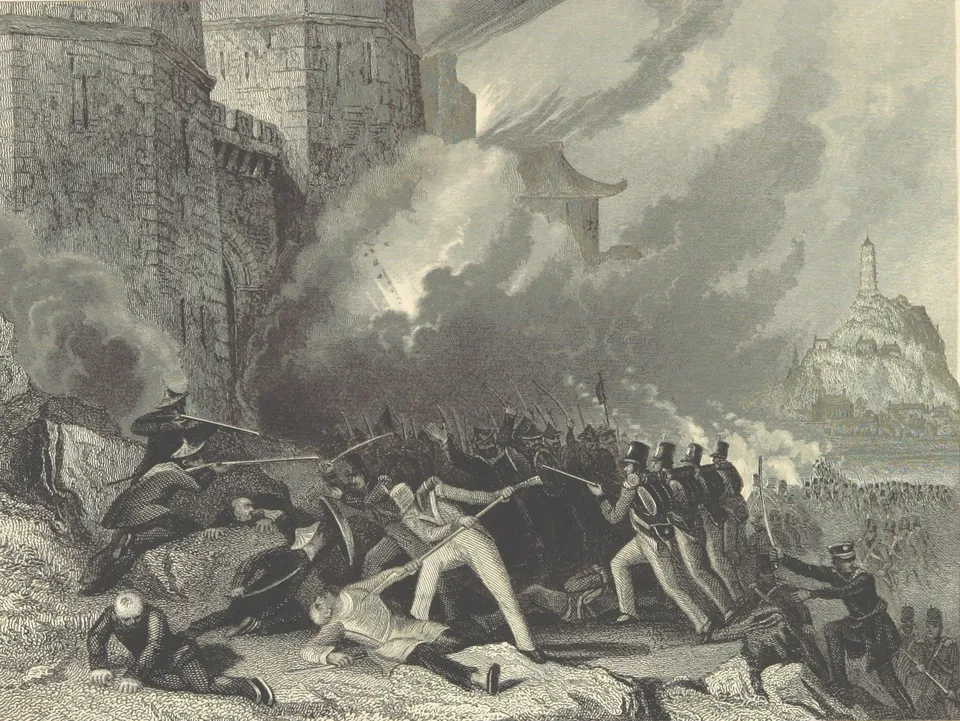
Thomas Allom · Public domain · Source
In the spring of 1842 the newly arrived Pottinger changed strategy. Rather than taking coastal ports one by one, he would sail up the Yangtze and cut the Grand Canal that carried southern grain to Beijing. After destroying the Wusong forts and occupying Shanghai in June, a fleet of more than seventy ships entered the Yangtze.
When the British attacked Zhenjiang, where the Grand Canal crosses the Yangtze, on 21 July, its Manchu Banner garrison fought to the last. As the city fell many soldiers and their families took their own lives, and the British suffered their heaviest losses of the war.
With the waterway cut and the British fleet before Nanjing in early August, the Qing could hold out no longer. The Treaty of Nanjing was signed aboard HMS Cornwallis on 29 August.