British Occupation of Hong Kong Island
In January 1841 British forces, led by the iron steamer Nemesis, destroyed the Chuanbi forts and on 26 January landed on Hong Kong Island and raised the flag. The island was ceded to Britain the following year by the Treaty of Nanjing.
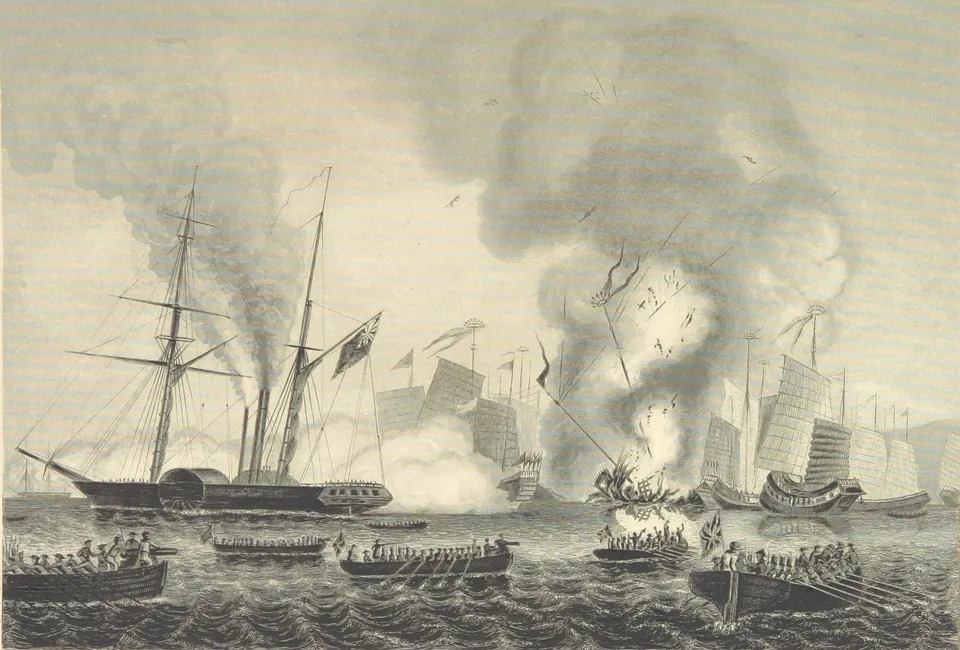
Thomas Allom · Public domain · Source
In the summer of 1840 the British expedition blockaded the Pearl River, sailed north to seize Dinghai on Zhoushan, and appeared off Dagu, close to Beijing. The alarmed court dismissed Lin Zexu and sent Qishan to negotiate.
As talks dragged on, British forces attacked the Chuanbi forts outside Humen on 7 January 1841. The East India Company’s iron steamer Nemesis came into shallow water and destroyed Qing war junks one after another. Elliot and Qishan agreed the Convention of Chuanbi, ceding Hong Kong Island and paying an indemnity, and on 26 January British forces landed on the island’s northwest shore and raised the flag.
Neither government accepted the convention. The Daoguang Emperor had Qishan arrested; Britain recalled Elliot for settling for too little and sent Pottinger. But Britain kept Hong Kong Island, which became British territory formally under the Treaty of Nanjing in 1842.