The Buddha and the Rise of Buddhism
Also called: Jainism, Mahavira
In the Ganges valley the Buddha attained enlightenment and taught that anyone, regardless of caste, could reach liberation through practice. Around the same time Mahavira founded Jainism.
Around the 6th century BCE iron tools brought agricultural growth and trading towns to the Ganges valley, where kingdoms such as Magadha and Kosala (the "sixteen great states") contended. The rising kshatriyas (rulers and warriors) and vaishyas (merchants) resented the Brahmins’ monopoly of sacrifice and the varna (caste) system that ranked society. New teachings arose in this setting.
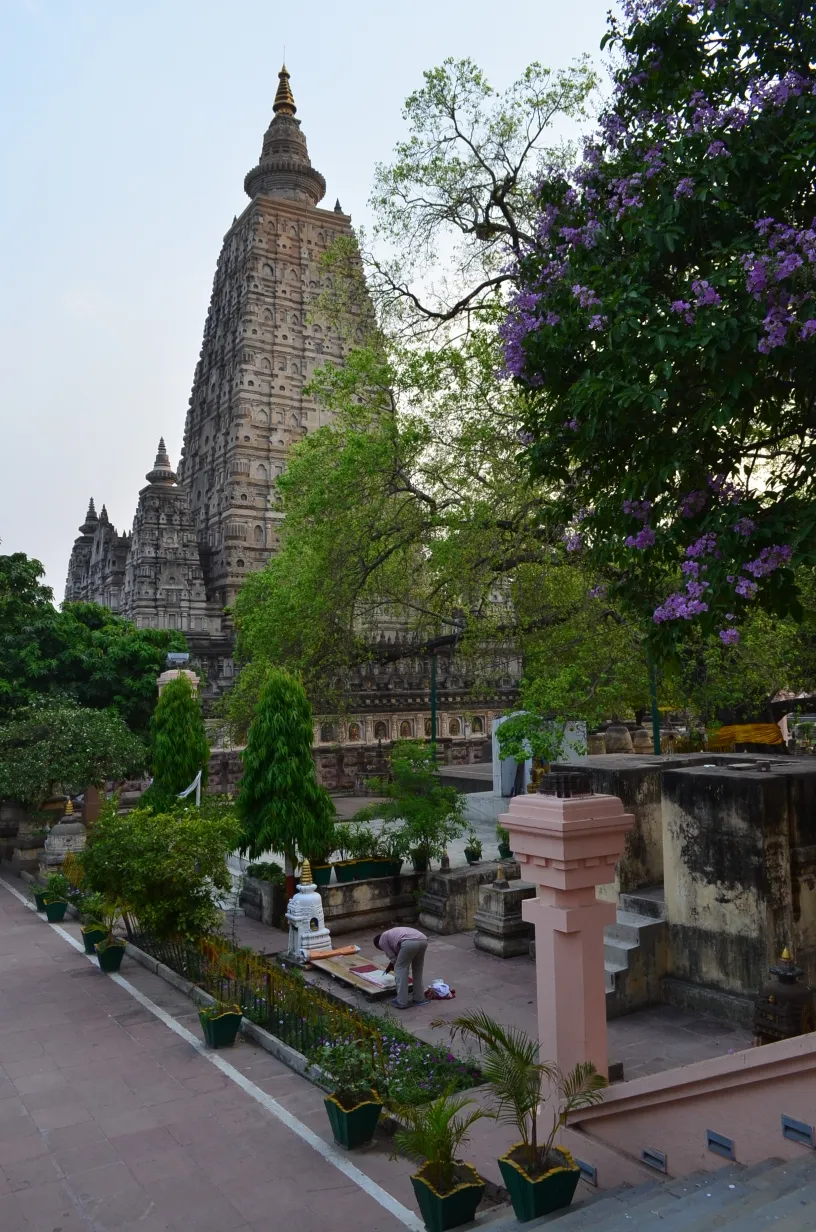
Siddhartha Gautama, a prince of the Shakya clan born at Lumbini (in today’s Nepal), renounced the world to overcome the suffering of birth, age, sickness and death, and attained enlightenment under the Bodhi tree at Bodh Gaya, becoming the Buddha, "the awakened one". After his first sermon at Sarnath (the Deer Park) he taught for the rest of his life. He explained the cause of suffering and the way out of it (the Four Noble Truths and the Eightfold Path) and taught that anyone, whatever their birth, could reach liberation (nirvana) through right practice — winning the support of kshatriyas and vaishyas. His dates are disputed: the traditional view is 563–483 BCE, while others place him around 480–400 BCE.
At about the same time Vardhamana (Mahavira) founded Jainism, teaching strict non-violence, asceticism and non-possession, which found its followers mainly among merchants. Buddhism spread across India and to Sri Lanka under the Maurya king Ashoka, and Mahayana Buddhism later travelled the Silk Road through China to reach Goguryeo and Baekje in the 4th century.