Politics17 April 1492

Capitulations of Santa Fe

Having taken Granada, Queen Isabella and King Ferdinand of Spain agreed to back Columbus’s westward voyage and set the titles and share he would receive.
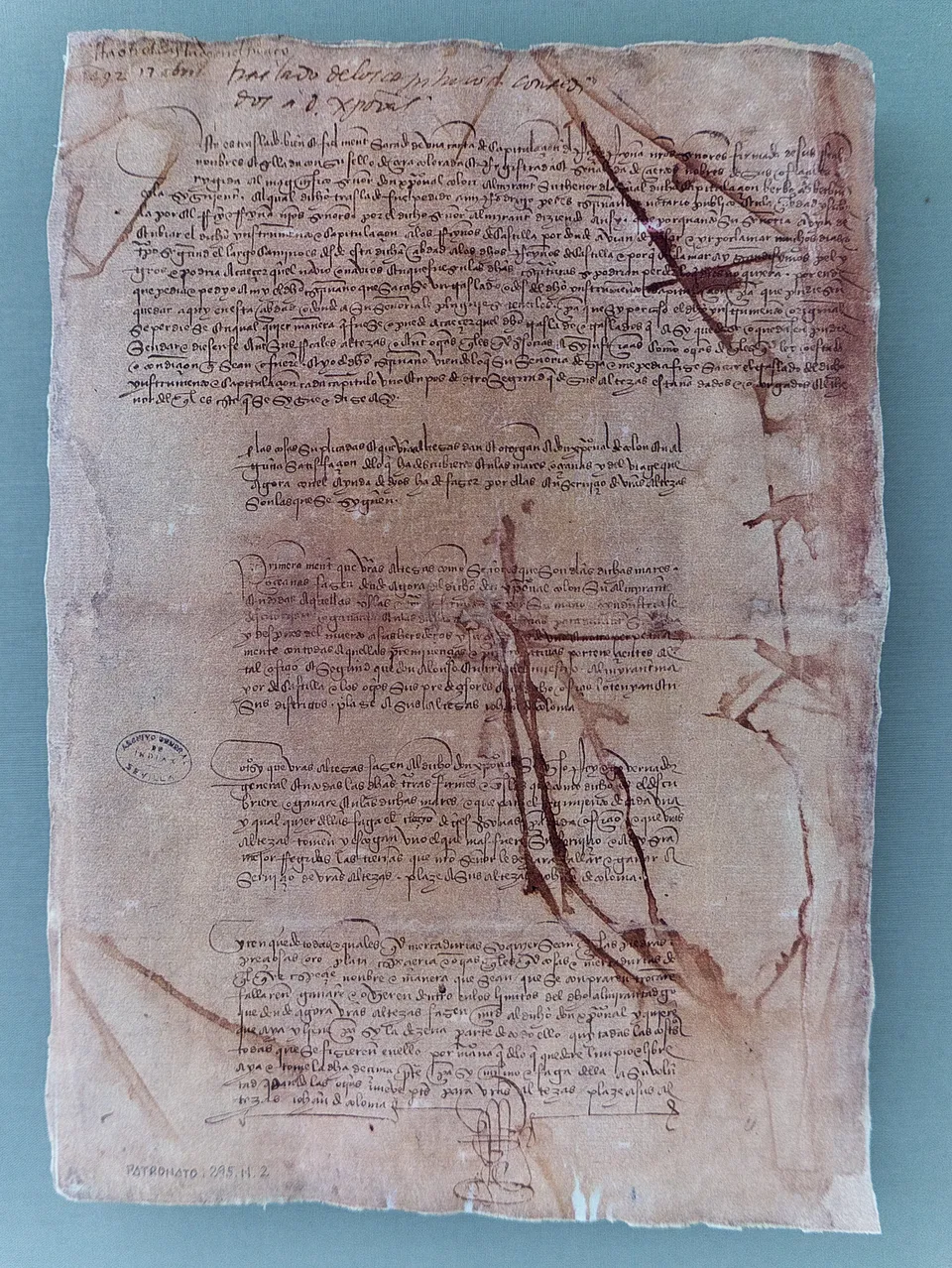
The Capitulations of Santa Fe — General Archive of the Indies, Seville

Jl FilpoC · CC BY-SA 4.0 · Source

For nearly ten years Columbus looked for a sponsor, arguing that sailing west across the Atlantic would reach Asia. John II of Portugal turned him down because he had made the Earth far too small, and Spanish scholars objected for the same reason. His figures were indeed wrong — had the Americas not lain between Europe and Asia, his ships would have run out of food long before arriving.

When Granada fell in January 1492, Queen Isabella summoned him again. Under the agreement signed on 17 April at Santa Fe, the camp town before Granada, Columbus was to become admiral, viceroy and governor of any lands he found and to receive a tenth of their revenues. These sweeping terms later became the subject of a long dispute between Columbus and the crown.
The map in 1492

OpenFreeMap © OpenMapTiles © OpenStreetMap contributors

States at the time
Spain · sponsor
Places
Santa Fe (Granada)

People

  • Christopher Columbus1451 – 1506

    key figure · Genoese navigator who, sponsored by Spain, crossed the Atlantic and reached the Americas in 1492

  • Isabella I of Castile1451 – 1504

    monarch · Queen of Castile who, ruling Spain with Ferdinand II of Aragon, conquered Granada and sponsored Columbus’s voyage

  • Ferdinand II of Aragon1452 – 1516

    monarch · King of Aragon who, married to Isabella I of Castile, united Spain and completed the Reconquista by conquering Granada

Before and after

Themes that include this event

  • The Age of Discovery1415 – 1600

    From Ceuta to the Manila galleons — two centuries in which European ships crossed the oceans and bound the world together by sea