Division of Israel and Judah
Also called: Divided Monarchy, Split of the United Monarchy
Around 930 BC, after Solomon died, the Hebrew kingdom split in two: the ten northern tribes made Jeroboam king of Israel, while the south formed the Kingdom of Judah at Jerusalem under Solomon’s son Rehoboam.
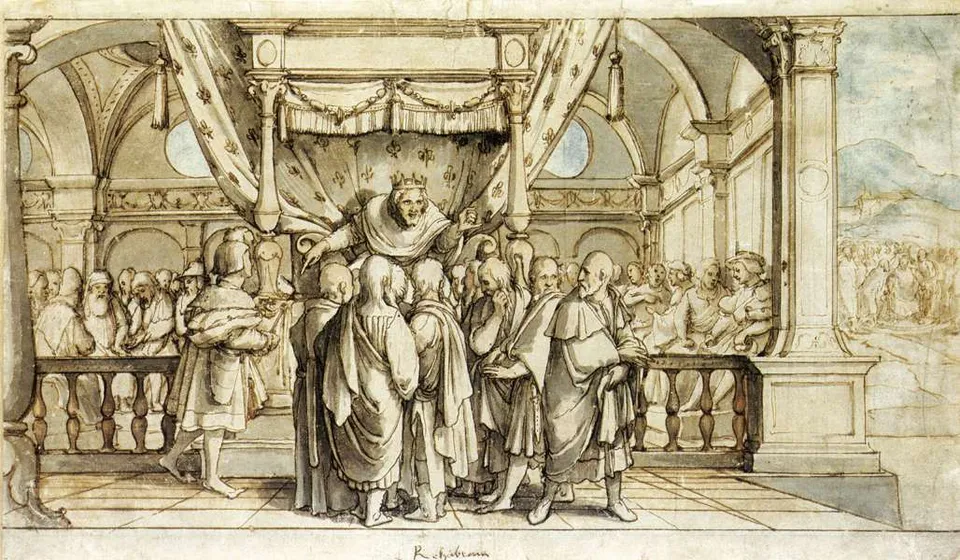
Hans Holbein the Younger · Public domain · Source
Solomon’s temple, palaces and fortified towns had cost his people heavy taxes and forced labour. When he died and his son Rehoboam went to Shechem to be made king, the northern tribes asked him to lighten their load. Taking the advice of his young courtiers rather than the elders, Rehoboam replied, “My father chastised you with whips, but I will chastise you with scorpions,” and the ten northern tribes rejected him and crowned Jeroboam, who had been in exile in Egypt, the Bible says.
So the northern Kingdom of Israel and the southern Kingdom of Judah came into being. Jeroboam set up golden calves at Bethel and Dan so that his people would not go on pilgrimage to the Temple in Jerusalem, and the two kingdoms went on alternately fighting and allying for generations. Larger and more fertile, Israel was the stronger but changed dynasties often; small Judah kept the house of David to the end.
Both kingdoms appear by name in Assyrian and Babylonian inscriptions, confirming that they existed. Whether the single great kingdom before them was as large as the Bible describes is debated. Israel fell to Assyria around 722 BC, and Judah to the Neo-Babylonians in 586 BC.