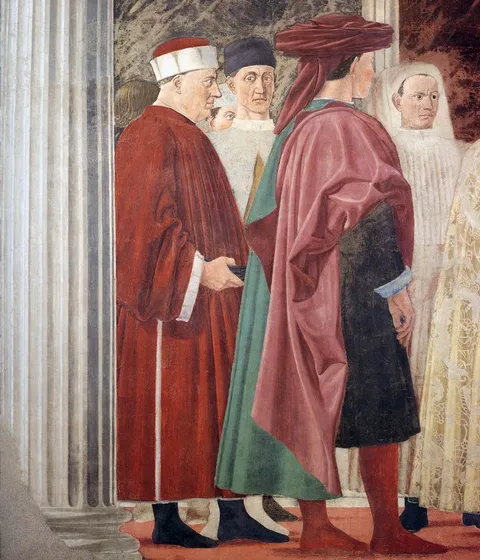
The Queen of Sheba Visits Solomon
Also called: Kebra Nagast
A story told in religious scripture.
A story told in the First Book of Kings: the queen of Sheba in the south came with spices and gold to test Solomon’s wisdom with hard questions. Ethiopia traces a royal dynasty to the meeting.
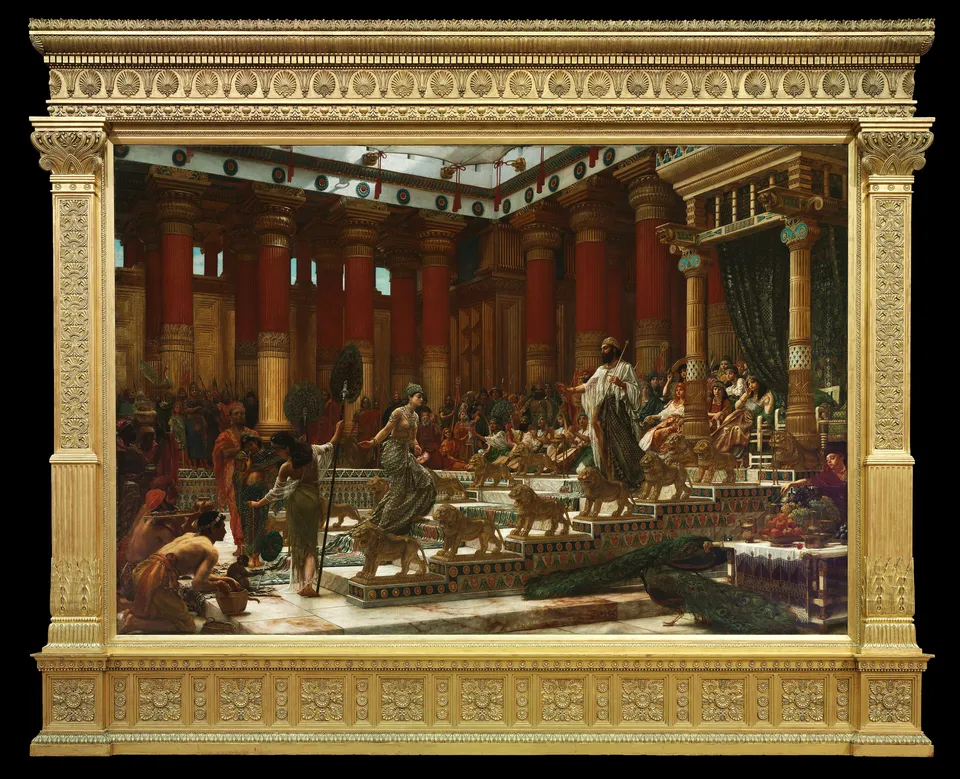
Sir Edward John Poynter (1836 - 1919) – creator Details on Google Art Project · Public domain · Source
This is the story told in 1 Kings 10. Hearing of Solomon’s fame, the queen of Sheba came to Jerusalem with camels laden with spices, gold and precious stones and tested him with hard questions. When Solomon answered them all and showed her his palace and the Temple, she declared that “not even half was told me,” and after exchanging gifts she went home.
Sheba is identified with the kingdom of Saba in southern Arabia, present-day Yemen, which grew rich on the “incense road” carrying frankincense and myrrh north; the great dam of its capital Marib still stands in ruins. Sabaean inscriptions, however, begin only around the 8th century BC, later than Solomon, and the Bible never gives the queen a name.
The short story later grew large. The 14th-century Ethiopian Kebra Nagast (“Glory of the Kings”) says Queen Makeda bore Solomon a son, Menelik I, who brought the Ark of the Covenant to Ethiopia. The Solomonic dynasty that took power in Ethiopia in 1270 claimed that descent, down to Emperor Haile Selassie in 1974. The Quran tells of the same queen, called Bilqis in later tradition.