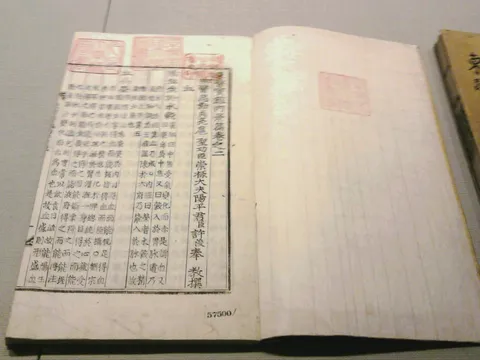
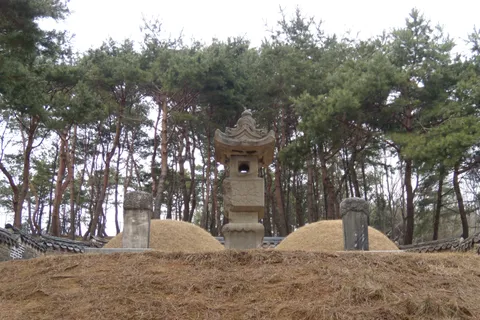
Dongui bogam completed
Heo Jun completed the 25-volume medical encyclopedia Dongui bogam, drawing on Korean herbs and remedies; it is on UNESCO’s Memory of the World register.
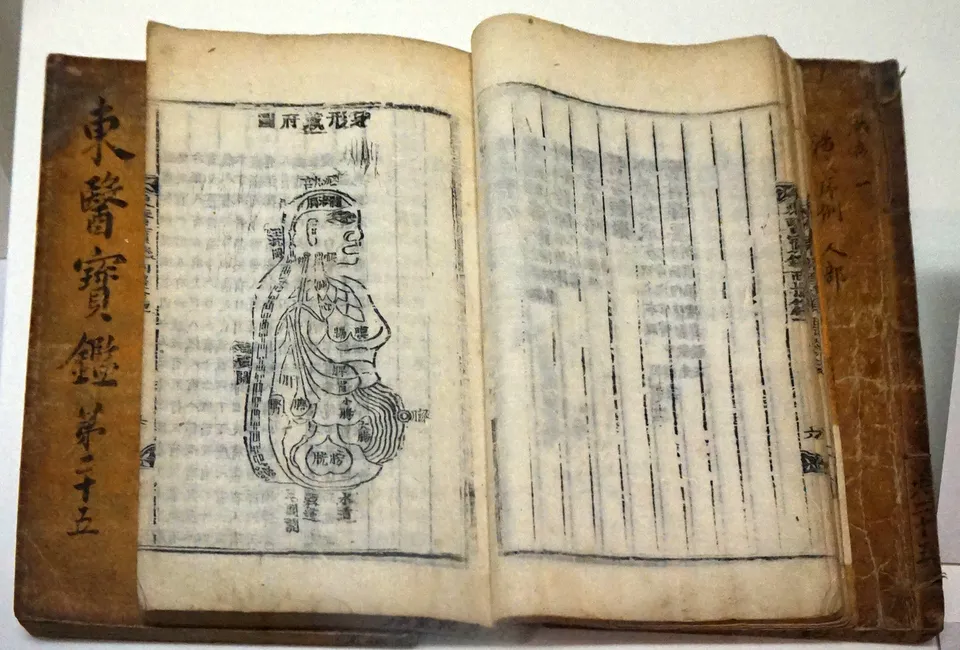
King Seonjo ordered Heo Jun to compile a medical work in 1596, in the middle of the Imjin War. When the second Japanese invasion halted the project Heo carried on alone, and kept writing even while exiled after Seonjo’s death, finishing in 1610, the second year of Gwanghaegun’s reign. The royal medical office printed it from woodblocks in 1613.
Its five parts — internal medicine, external body, miscellaneous diseases, materia medica, and acupuncture and moxibustion — set out causes, symptoms, prescriptions and treatments. “Dongui” means the medicine of the East, i.e. of Korea as distinct from China. It continued the native-herb tradition of Sejong’s Hyangyak jipseongbang, giving herb names in Hangul as well.
Later printed in Qing China and Japan, it was read widely across East Asia and was inscribed on UNESCO’s Memory of the World register in 2009.