Emergence of Homo sapiens
Also called: Origin of modern humans
About 300,000 years ago Homo sapiens — our own species — appeared in Africa. The oldest known fossils come from Jebel Irhoud in Morocco.
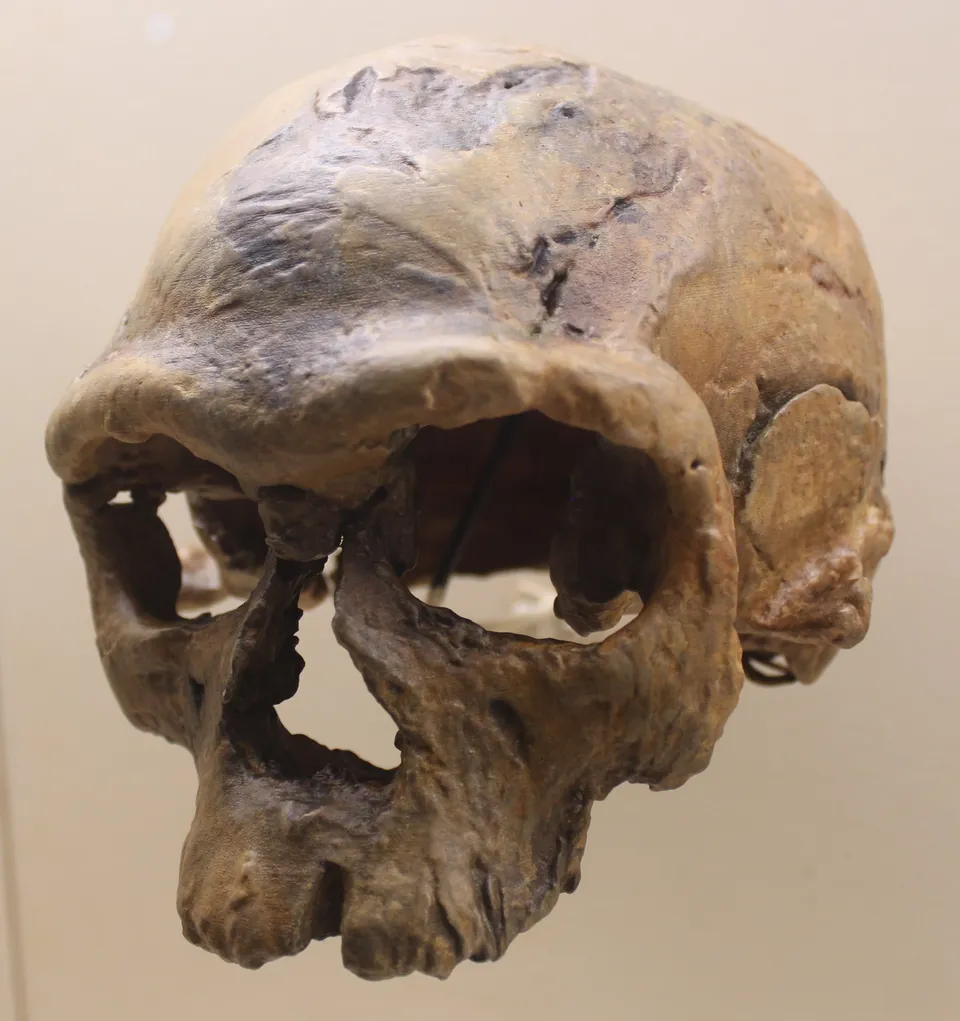
Jonathan Chen · CC BY-SA 4.0 · Source
The human line split from that of the chimpanzees in Africa some 7 to 6 million years ago. Many human species (hominins) came and went after that, and some, such as Homo erectus, left Africa early and reached Asia.
Skull and tooth fossils published from Jebel Irhoud, Morocco, in 2017 are about 300,000 years old: their faces are almost like ours, though the back of the skull is long. Together with the Omo Kibish skull from Ethiopia (about 230,000 years old), they support the idea that modern humans arose not in one spot but across Africa, among groups that mixed over a long time.
Every person alive today descends from them. Most people outside Africa descend from one branch that left Africa about 60,000 to 50,000 years ago.