End of the last ice age
Also called: Holocene, Doggerland
About 11,700 years ago the last ice age ended and the present warm epoch, the Holocene, began. Meltwater raised the sea and drowned Beringia, the Yellow Sea plain and Doggerland, making today’s coastlines.
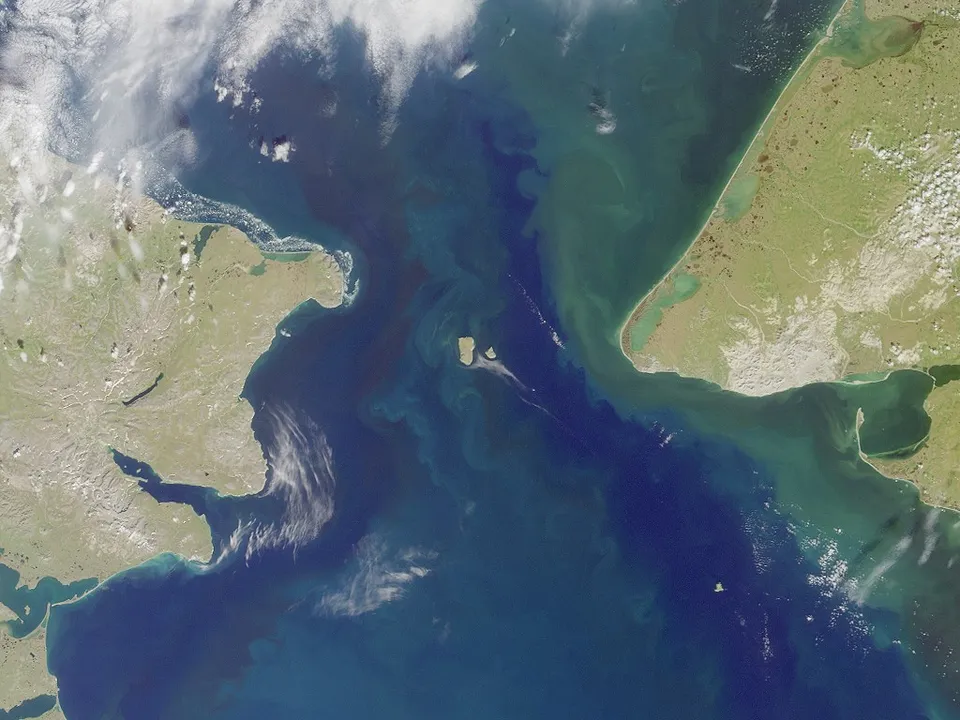
NASA/GSFC/JPL/MISR-Team · Public domain · Source
The ice sheets began to melt about 19,000 years ago, and after a brief cold snap (the Younger Dryas) the present interglacial, the Holocene, began about 11,700 years ago.
Meltwater raised the sea by nearly 120 m over some ten thousand years. Beringia was drowned about 11,000 years ago, separating America from Asia; the Yellow Sea plain became sea and Korea took roughly its present shape; Doggerland, between Britain and the continent, sank step by step and was almost gone by 8,000 years ago.
In the warm, stable climate farming began in several places, first in the Fertile Crescent of western Asia, and wandering hunters settled in villages.