Last Glacial Maximum
Also called: LGM, Bering land bridge, Beringia
Ice was at its greatest about 26,000 to 19,000 years ago. Thick ice sheets covered North America and northern Europe, and seas some 120 m lower than today left Beringia, the Yellow Sea plain, Sunda and Doggerland as dry land.
Jonathan Chen · CC BY-SA 4.0 · Source
For hundreds of thousands of years the earth has swung between cold glacials and warm interglacials. In the coldest part of the last glacial, about 26,000 to 19,000 years ago, most of Canada and the northern United States lay under the Laurentide ice sheet, up to 3 km thick, and Scandinavia and northern Britain under another.
With so much water locked up as ice, sea level stood about 120 m below today’s. A “Bering land bridge” more than 1,000 km wide joined Siberia and Alaska; a broad plain lay where the Yellow Sea and northern East China Sea are, joining Korea to mainland China; Britain was joined to Europe and the great islands of Southeast Asia to Asia.
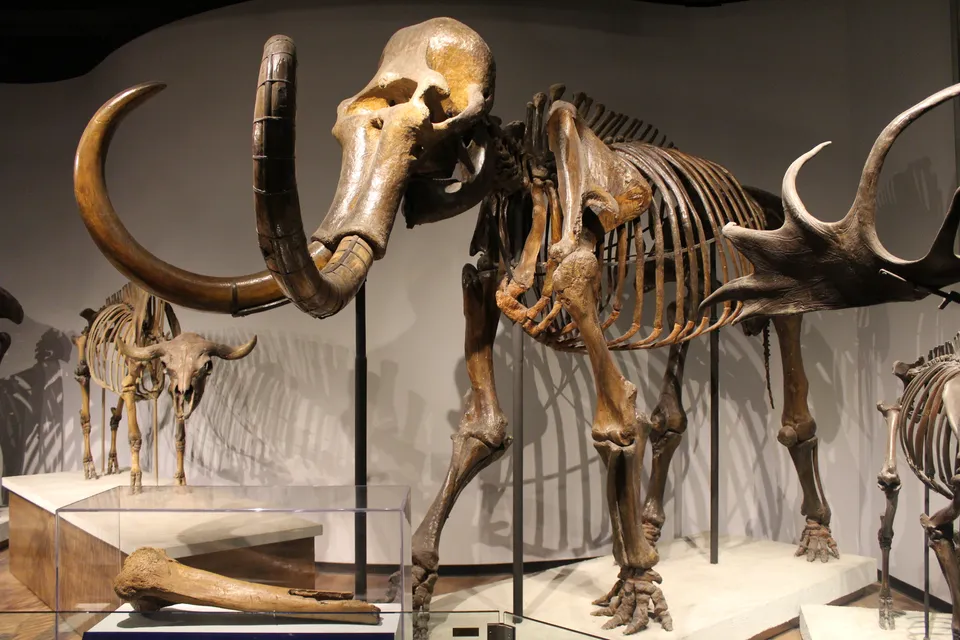
People hunted mammoth and reindeer on the cold steppes before the ice or retreated to the warmer south. The exposed land became the road by which people crossed to the Americas.