Conflict1905 – 1906

Eulsa Righteous Armies

Righteous armies rose across the country against the 1905 treaty: Min Jong-sik took Hongju, Choe Ik-hyeon rose at Taein, and the commoner leader Sin Dol-seok fought along the east coast.
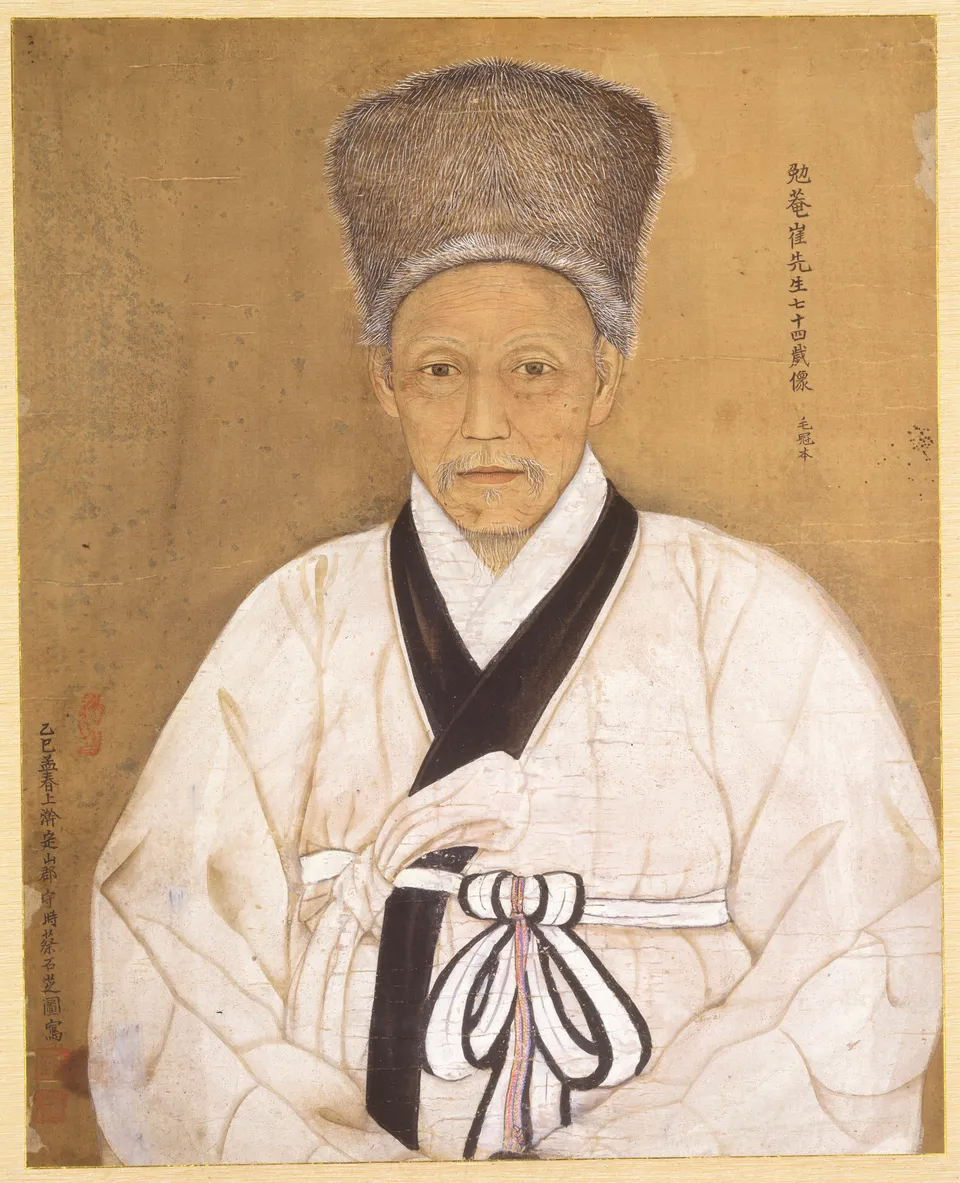
Portrait of Choe Ik-hyeon, who raised a righteous army at Taein — by Chae Yong-sin, 1905

채용신 (蔡龍臣, 1848-1941) · Public domain · Source

The former official Min Jong-sik captured Hongju Fortress in May 1906 but lost it to Japanese troops. Choe Ik-hyeon raised an army at Museong Seowon in Taein in June 1906 and advanced to Sunchang, but when Korean garrison troops arrived he refused to "fight our own people", was captured, and died in exile on Tsushima.

Sin Dol-seok of Yeonghae, a commoner, led guerrilla war in the mountains of Gyeongsang and Gangwon. From this time commoners appeared as righteous army leaders, broadening the movement’s social base.

The map in 1905

OpenFreeMap © OpenMapTiles © OpenStreetMap contributors

States and rulers at the time
Korean Empire — Gojong
Japan · belligerent — Emperor Meiji
Places
Hongju Fortress, Museong Seowon

People

  • Min Jong-sik1861 – 1917

    militia leader · Righteous army leader who captured Hongju Fortress in 1906

  • Choe Ik-hyeon1833 – 1907

    militia leader · Confucian loyalist whose memorials toppled the Daewongun and opposed opening to Japan; raised a righteous army in 1906 and died in captivity on Tsushima

  • Sin Dol-seok1878 – 1908

    militia leader · Commoner righteous army leader who rose at Yeonghae in 1906 and fought in the eastern mountains, called the "Tiger of Taebaeksan"

Before and after