Fall of Daegaya
King Jinheung sent Isabu and Sadaham to conquer Daegaya, ending the Gaya confederacy.
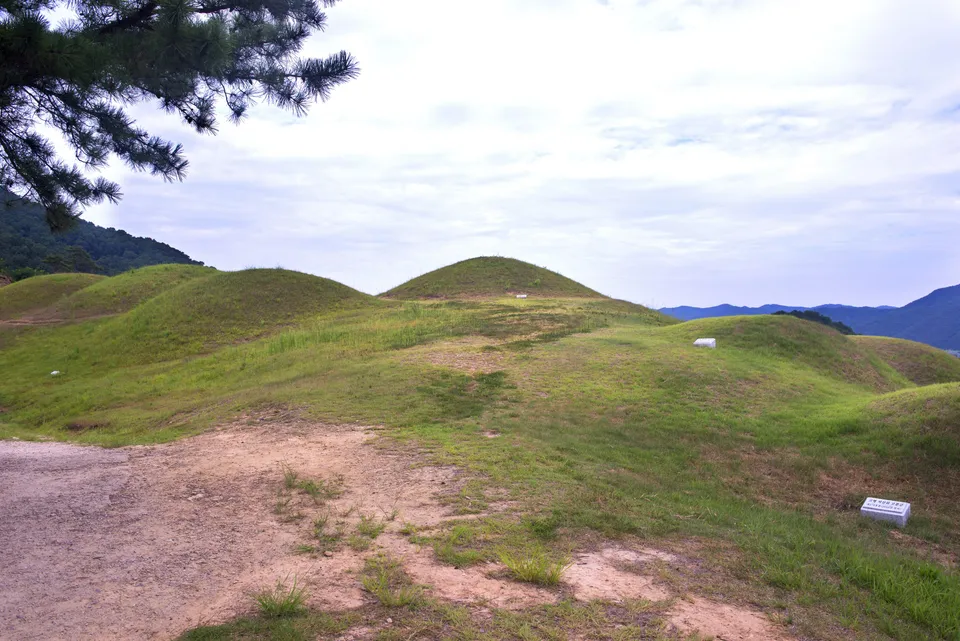
Korea Heritage Service · CC BY-SA 4.0 · Source
After Geumgwan Gaya declined in 400, Daegaya at Goryeong led the later Gaya confederacy from the late 5th century. It sent an envoy to Southern Qi in 479 and received a title, and in 522 made a marriage alliance with Silla. But it sided with Baekje at Gwansan Fortress in 554 and never recovered from the defeat.
When Daegaya defied Silla in 562, Jinheung sent Isabu. The hwarang Sadaham led 5,000 horsemen through the Jeondan Gate first, and Daegaya fell. The Gaya confederacy was gone, and the whole Nakdong basin belonged to Silla.
The Gaya musician Ureuk, who had composed pieces for the gayageum at King Gasil’s command, went over to Silla before the fall and taught the instrument there. The Jisan-dong tombs at Goryeong became World Heritage in 2023 as part of the Gaya Tumuli.