Founding of Western Xia
Also called: Great Xia, Tangut state, Qingli peace
Li Yuanhao of the Tanguts proclaimed himself emperor of Great Xia (Western Xia) in 1038. He had a Tangut script created, fought the Song into a treaty of annual payments in 1044 and held the Hexi Corridor, the east–west trade route.
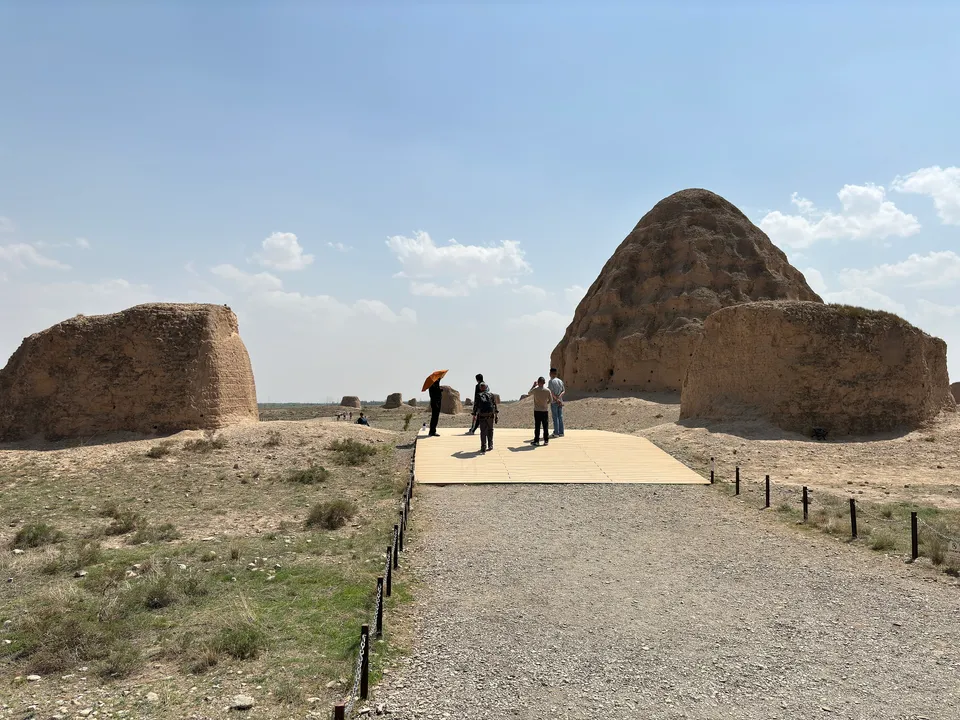
Thebrainchamber1 · CC BY-SA 4.0 · Source
The Tanguts had grown strong in the Ordos since the late Tang, playing the Song and Liao off against each other. Around 1036 Li Yuanhao had a script modelled on Chinese characters devised, and in 1038 at Xingqing (today’s Yinchuan) he proclaimed himself emperor of Great Xia. The Song refused to recognise him and from 1040 lost battle after battle at Sanchuankou, Haoshuichuan and Dingchuanzhai.
Under the Qingli peace of 1044 Xia nominally acknowledged itself a Song subject, while the Song sent silver, silk and tea every year. Around the same time Liao also pressed the Song into raising its payments. Paying tribute to the north and west alike, the Song’s fiscal and military troubles set the stage for Wang Anshi’s New Policies.
Holding the Hexi Corridor, Xia profited from Silk Road trade and built a flourishing Buddhist culture, until it was destroyed by Genghis Khan’s Mongols in 1227.