Wilson’s Fourteen Points
Also called: Fourteen Points, National self-determination
In a speech to Congress, President Wilson set out fourteen principles for the post-war peace — an end to secret diplomacy, national self-determination, a League of Nations — raising great hopes among colonial peoples.
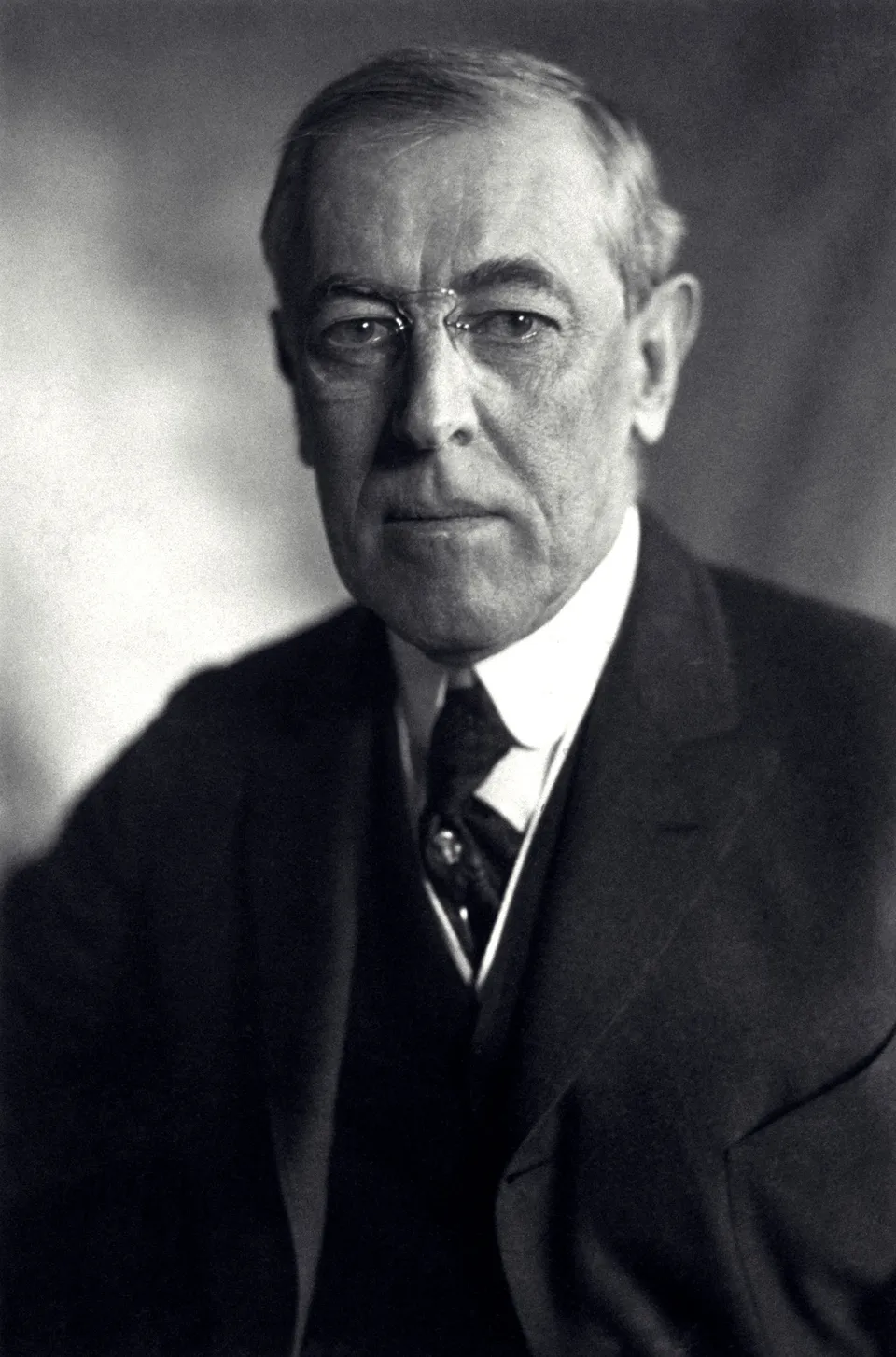
Harris & Ewing · Public domain · Source
On 8 January 1918 Wilson explained what America was fighting for and laid down the principles of a settlement: no more secret diplomacy, freedom of the seas and free trade, arms reduction, and an impartial adjustment of colonial claims that weighed the interests of the peoples concerned. He called for Belgium’s restoration, the return of Alsace-Lorraine, autonomy for the peoples of Austria-Hungary and the Ottoman Empire and an independent Poland, and his final point proposed an association of nations — the League of Nations.
The speech was also an answer to the Bolsheviks’ Decree on Peace, which demanded a peace without annexations or indemnities. The principle that every people should decide its own political fate — national self-determination — was applied only to the territories of the defeated powers, yet it gave colonial peoples hope of independence. In Korea the Sinhan Youth Party sent a delegate to Paris, and the idea helped inspire the March First Movement.