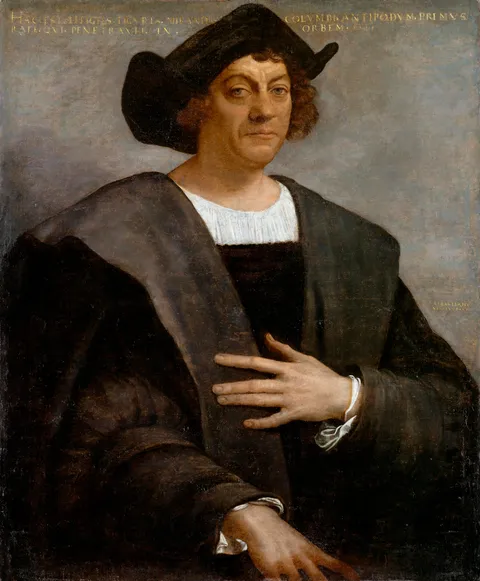
Fourth Voyage of Columbus
On his last voyage Columbus followed the coast of Central America in search of a strait to Asia. With his ships eaten by shipworm he was stranded on Jamaica for a year — and is said to have won food from the natives by foretelling a lunar eclipse.
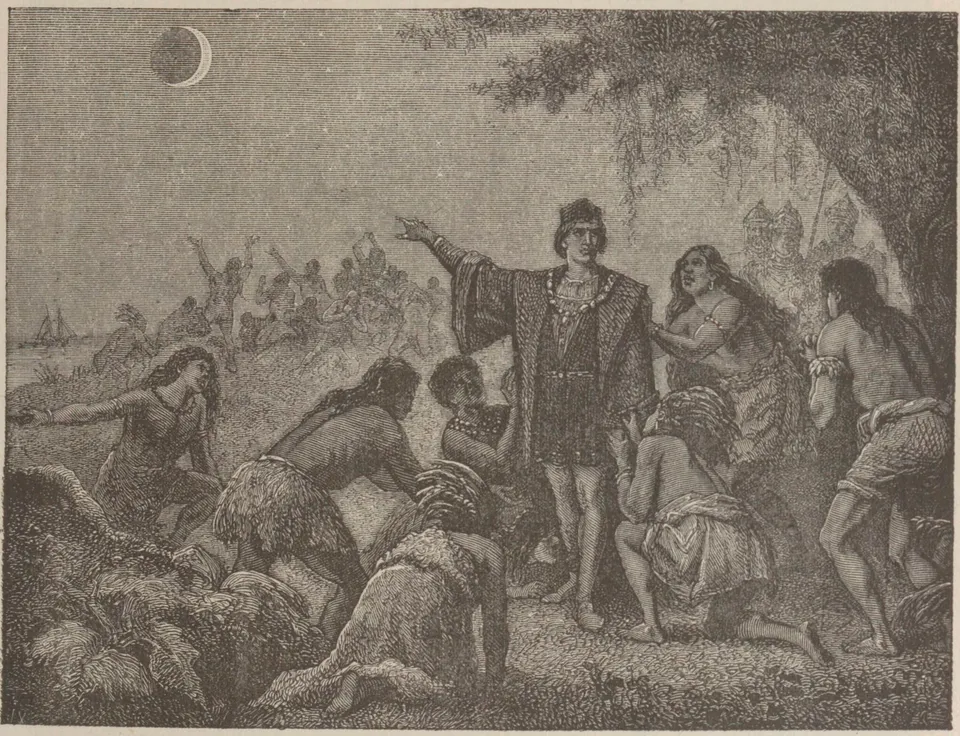
Camille Flammarion · Public domain · Source
Sailing with four ships in 1502, Columbus was barred from Santo Domingo. He warned that a hurricane was coming, but the new governor Ovando ignored him and sent out the gold fleet; some twenty ships sank, Bobadilla among the dead. Columbus followed the coasts of present-day Honduras, Nicaragua, Costa Rica and Panama looking for a passage to Asia and found none. A settlement he tried to found at Belén in Panama was abandoned after native attacks.
His shipworm-riddled vessels were beached on the north coast of Jamaica in June 1503, and the party was stranded there for a year. When the natives stopped supplying food, Columbus found in his almanac a lunar eclipse due on 29 February 1504 and warned that God in anger would hide the moon; when the moon did turn dark red, the frightened islanders are said to have resumed supplies. Rescued in June 1504, he reached Spain that November.