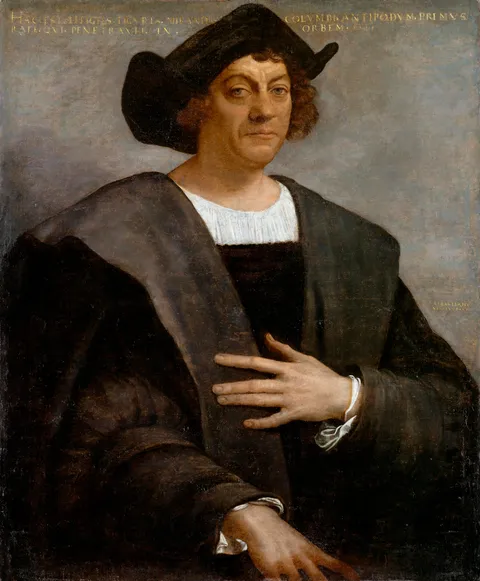
Third Voyage of Columbus
On his third voyage Columbus reached Trinidad and the South American mainland at the Paria Peninsula — but unable to master the turmoil on Hispaniola, he was sent back to Spain in chains in 1500.
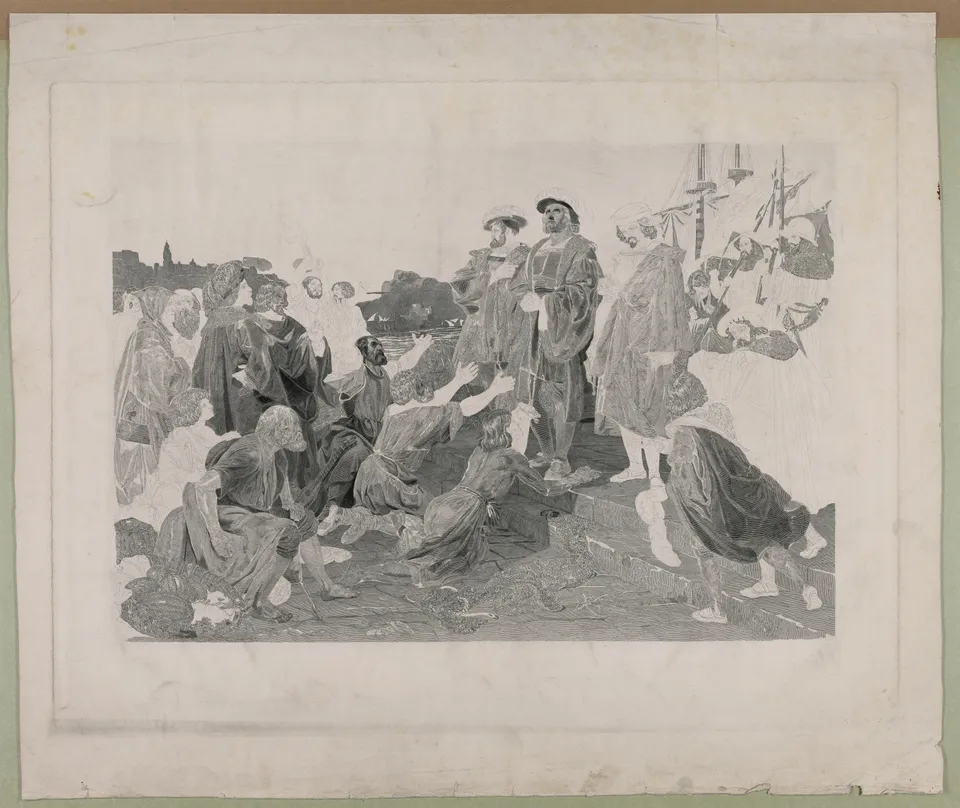
Popular Graphic Arts · Public domain · Source
Leaving Spain in May 1498, Columbus crossed by a more southerly route and on 31 July sighted an island with three peaks, naming it Trinidad (the Trinity). In the Gulf of Paria he then set foot on the South American mainland for the first time. Seeing the vast flow of fresh water the Orinoco poured into the sea, he wrote that this was a great continent — perhaps near the Earthly Paradise of the Bible.
In Santo Domingo, newly founded on the south coast by his brother Bartholomew, settlers were in revolt. As complaints about the brothers’ harsh rule mounted, the Catholic Monarchs sent the investigator Francisco de Bobadilla. Arriving in August 1500, Bobadilla arrested the Columbus brothers and shipped them to Spain in chains. The crown released him but never restored his governorship.