French and Indian War
Also called: Battle of the Plains of Abraham, Seven Years’ War in North America
A war in North America between Britain and France over the Ohio valley, with most native peoples on the French side. Britain won, taking Canada and the lands east of the Mississippi.
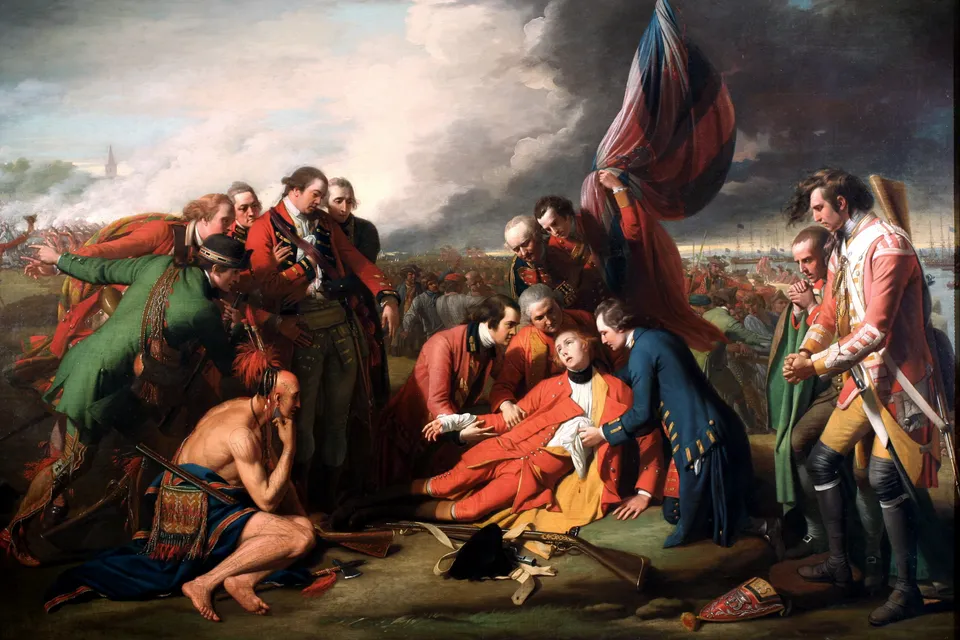
Benjamin West · Public domain · Source
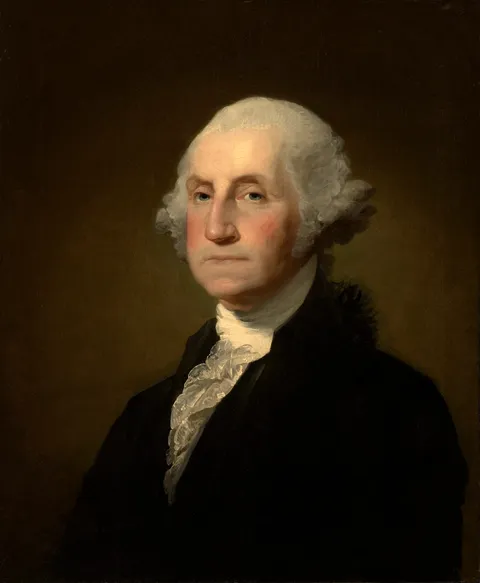
In the mid-18th century, as British colonists pushed beyond the Appalachians, France — which sought to link the St Lawrence and the Mississippi — built forts in the Ohio valley. In 1754 a young George Washington, leading Virginia militia, clashed with the French and was forced to surrender at Fort Necessity, starting the war; when the Seven Years’ War broke out in Europe in 1756 the two conflicts merged. Most native peoples sided with the French.
The French had the upper hand at first, but the tide turned when William Pitt’s ministry poured troops and money into America. On 13 September 1759 General Wolfe’s British army defeated Montcalm’s French on the Plains of Abraham outside Quebec — both generals were killed — and Montreal surrendered the next year. By the Treaty of Paris in 1763 France ceded Canada and the lands east of the Mississippi to Britain and withdrew from the North American mainland.
Deep in debt from the war, Britain began to station troops in the colonies and levy new taxes, kindling the American Revolution. In Joseon, Yeongjo had shortly before eased the military-service burden on commoners with the Equal Service Law (1750).