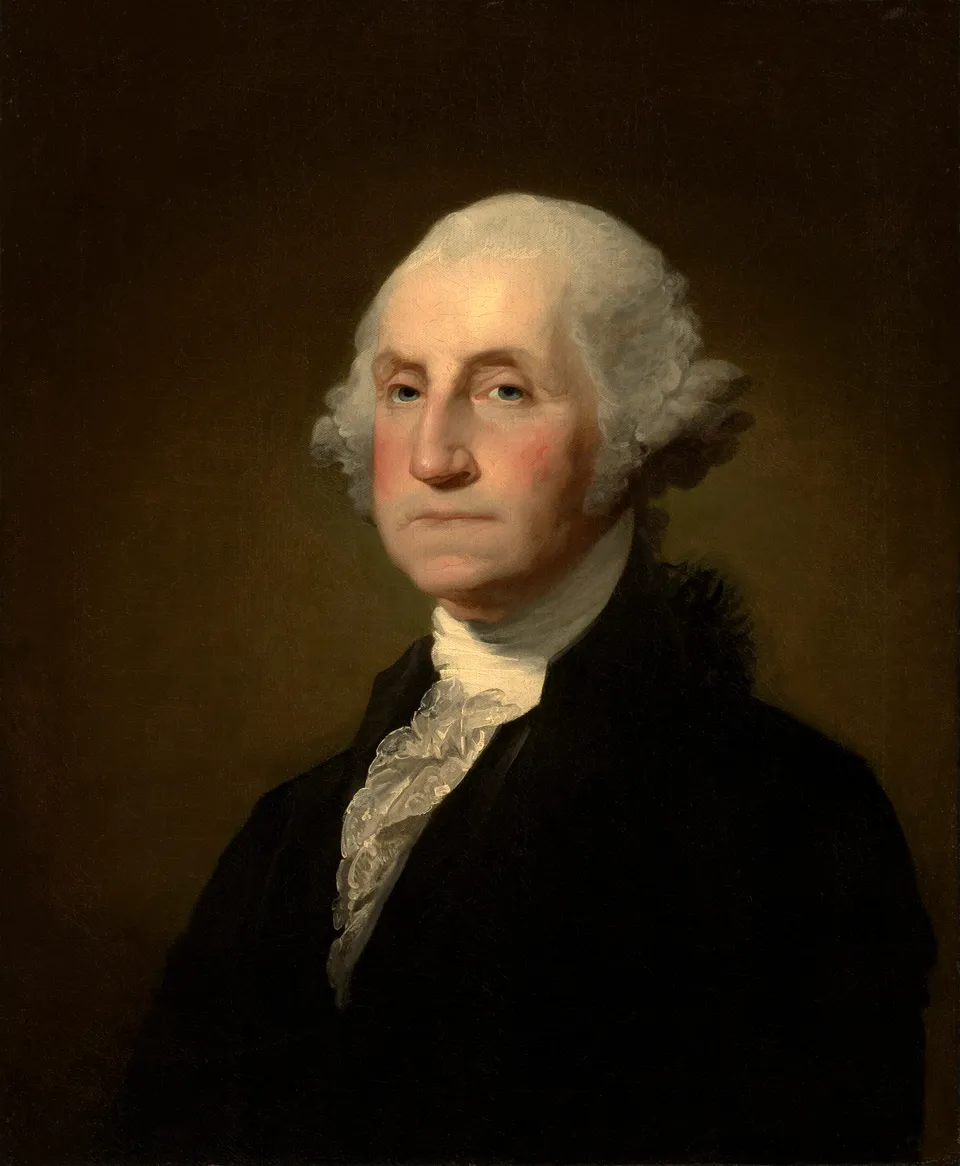
Gilbert Stuart · Public domain · Source
Person1732 – 1799
George Washington
Commander of the Continental Army and first US president
Gilbert Stuart · Public domain · Source
Commander of the Continental Army and first US president
A war in North America between Britain and France over the Ohio valley, with most native peoples on the French side. Britain won, taking Canada and the lands east of the Mississippi.
The war between the Thirteen Colonies and Britain that began with the clashes at Lexington and Concord. Aided by France and Spain, the colonists won at Yorktown, and the Treaty of Paris of 1783 recognised American independence.
Delegates of the thirteen colonies, meeting in Philadelphia, declared independence from Great Britain.
British general who won the Battle of the Plains of Abraham in 1759 and took Quebec, but was killed in the battle
Commander of the French forces in New France, defeated on the Plains of Abraham and died the next day
Three centuries in which the Ottomans of Suleiman I, the Mughals of Akbar and the Safavids of Abbas I flourished and then faltered, while across the Atlantic the slave trade and colonies transformed the Americas, leading to American independence
The Scientific Revolution from Copernicus to Newton, parliamentary government in England won through the Puritan and Glorious Revolutions, and the Enlightenment that sought to remake society by reason — the groundwork of the civic revolutions and the Industrial Revolution
From the Declaration of Independence to the German Empire — a century in which liberalism and nationalism toppled the old order in Europe and the Americas and built nation-states