Culture682

Completion of Gameunsa and the Manpasikjeok Flute

King Sinmun completed Gameunsa, begun by his father Munmu; the legend of the Manpasikjeok, a flute received from the dragon of the East Sea, dates from this time.
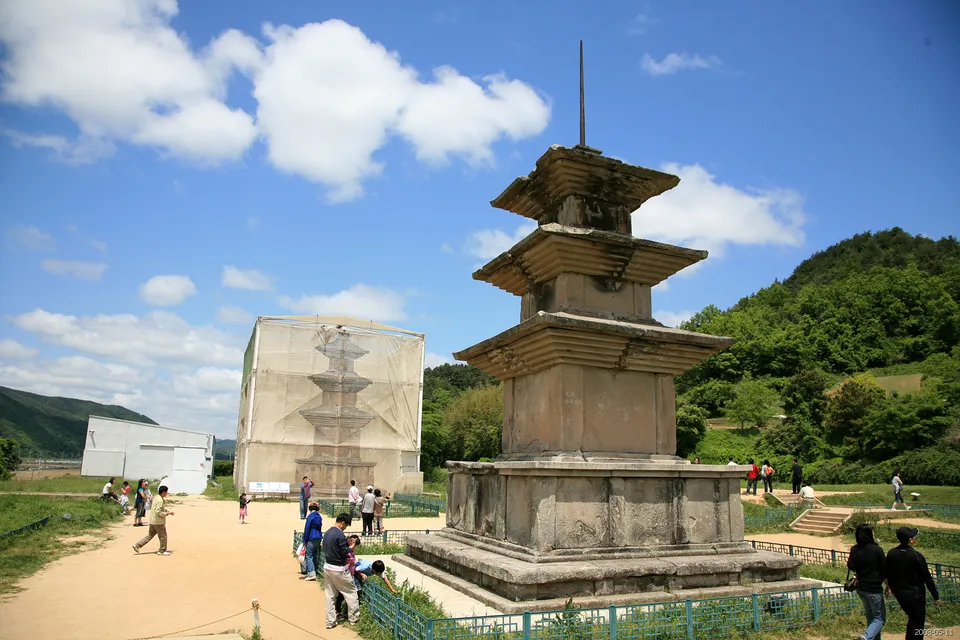
East and west three-story pagodas at the Gameunsa temple site, completed by King Sinmun in 682, Gyeongju

Junho Jung · CC BY 3.0 · Source

Munmu asked to be buried in the East Sea so that he could become a dragon and guard against Japanese raiders; the offshore rock Daewangam is said to be his tomb. Sinmun finished Gameunsa facing it, leaving a hollow beneath the main hall so that the dragon could come and go.

According to the Samguk yusa, Sinmun made a flute from bamboo found on a small island; when played it drove off enemies, cured illness and brought rain, and was named Manpasikjeok, "the flute that calms ten thousand waves". The story is read as an expression of strong post-unification kingship and a longing for peace.

The map in AD 682

OpenFreeMap © OpenMapTiles © OpenStreetMap contributors

States and rulers at the time
Silla — King Sinmun
Places
Gameunsa Temple Site, Gyeongju, Underwater Tomb of King Munmu (Daewangam)

People

  • King SinmunAD 692

    monarch · Munmu's son and 31st king of Silla, who crushed Kim Heum-dol's revolt and strengthened royal power through the National Academy, the nine provinces and office-land grants

  • King MunmuAD 626 – AD 681

    related figure · Thirtieth king of Silla, who destroyed Goguryeo, expelled Tang and completed unification

Before and after

Themes that include this event

  • Changes in PagodasAD 634 – 1467

    From Baekje stone pagodas copying timber ones and Silla pagodas copying brick ones, to Unified Silla three-story pagodas and stupas, Goryeo multi-sided pagodas and Yuan-influenced marble towers

  • Gyeongju57 BC – 1860

    Silla’s capital for a thousand years — tombs, pagodas, temples and bells from every age of Silla, and the birthplace of Donghak