Great Depression
Also called: Great Slump, World Economic Crisis
An economic crisis that began with the 1929 crash on Wall Street spread around the world, collapsing production and trade and throwing millions out of work. How nations met the crisis set democracies and totalitarian states on different paths.
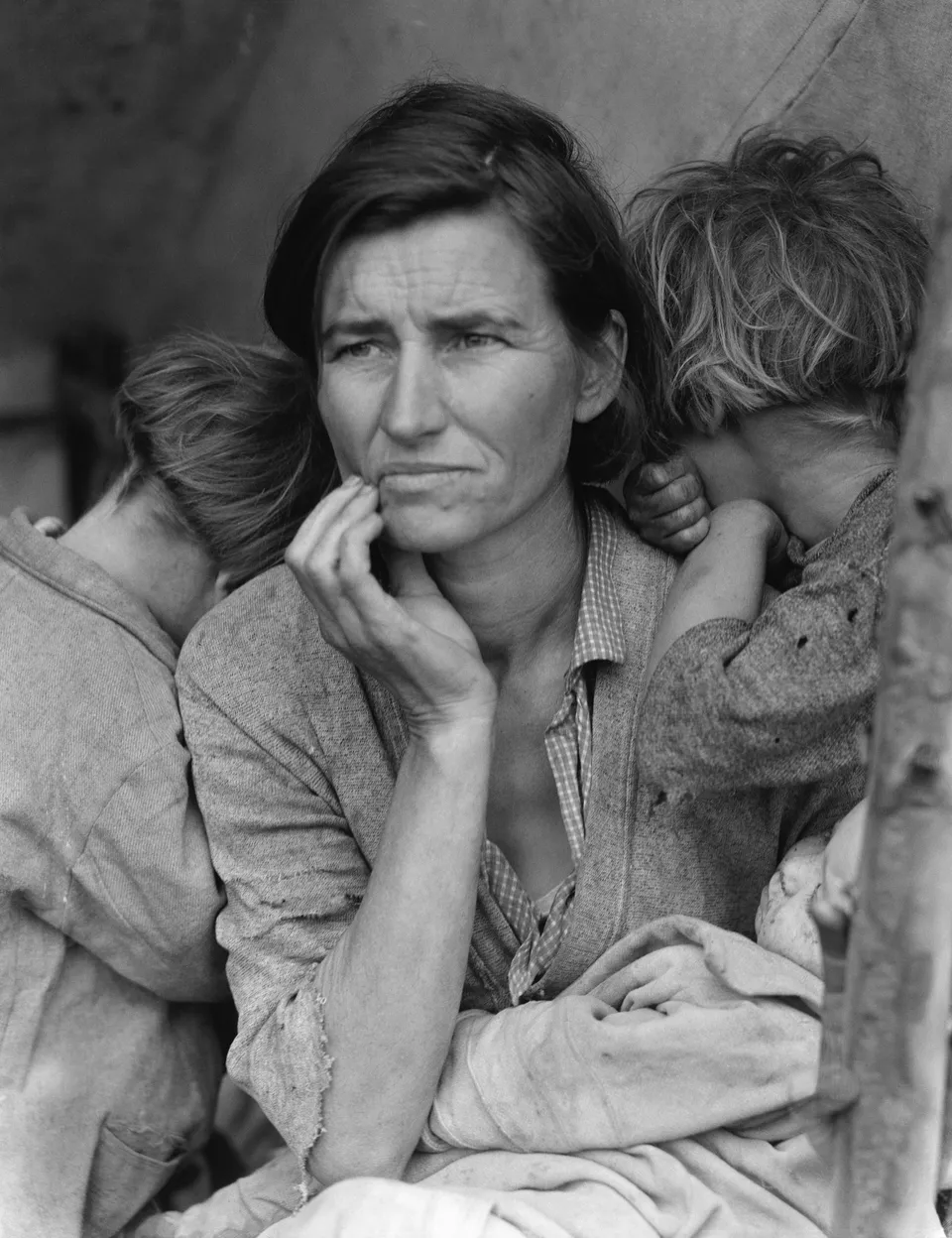
Dorothea Lange · Public domain · Source
America prospered in the 1920s on mass production and consumption, but output grew faster than incomes, farm prices were depressed and speculation in shares bought on credit inflated a bubble. When the New York stock market collapsed in October 1929, banks closed one after another and businesses failed. By 1933 US industrial output had fallen by nearly half from 1929 and one worker in four had lost his job.
As American lenders called in their loans to Europe, Austrian and German banks failed in 1931 and Britain left the gold standard. When the US sharply raised tariffs in 1930, other countries retaliated, and within a few years world trade shrank to roughly a third of its former value. Germany’s jobless reached six million, and in Japan and colonial Korea the collapse of rice prices impoverished the countryside.
The US, Britain and France weathered the crisis through state intervention such as the New Deal and through economic blocs. But in Germany, Italy and Japan, with few colonies and weaker economies, fascism and militarism gained ground and sought a way out through aggression. The Depression wrecked international cooperation, opened the road to the Second World War, and gave rise to a modified capitalism in which governments managed the economy.