Kellogg–Briand Pact
Also called: Pact of Paris, General Treaty for Renunciation of War
On the initiative of French foreign minister Briand and US Secretary of State Kellogg, the powers pledged to renounce war as an instrument of national policy.
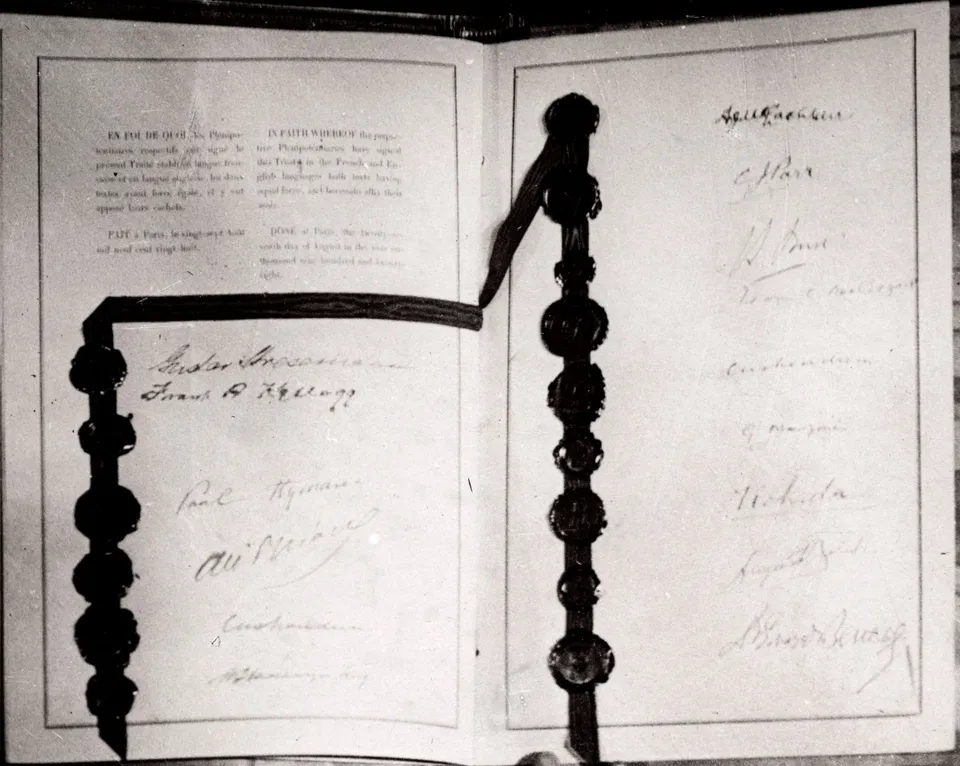
Unknown photographer possibly Erich Salomon · Public domain · Source
In 1927 Briand proposed a treaty by which France and the United States would never go to war with each other; Kellogg replied by suggesting a treaty open to every nation. On 27 August 1928 fifteen countries, among them the US, France, Germany, Britain, Italy and Japan, signed in Paris, and some sixty more later joined. Its formal name was the General Treaty for Renunciation of War; it is also called the Pact of Paris.
The pact bound its parties to settle disputes only by peaceful means, but it had no way to punish violators and left war in self-defence as an exception. It lost force as Japan, a signatory, launched the Manchurian Incident in 1931 and Italy and Germany turned to aggression. Yet by treating war as unlawful it later grounded the charge of “crimes against peace” at the Nuremberg and Tokyo trials after the Second World War, and it fed into the UN Charter’s ban on the use of force.