Iranian Constitutional Revolution
Also called: Persian Constitutional Revolution, Mashruteh
Merchants, clergy and intellectuals rose against Qajar despotism and foreign concessions and won a constitution and a parliament, but British and Russian interference brought the revolution down.
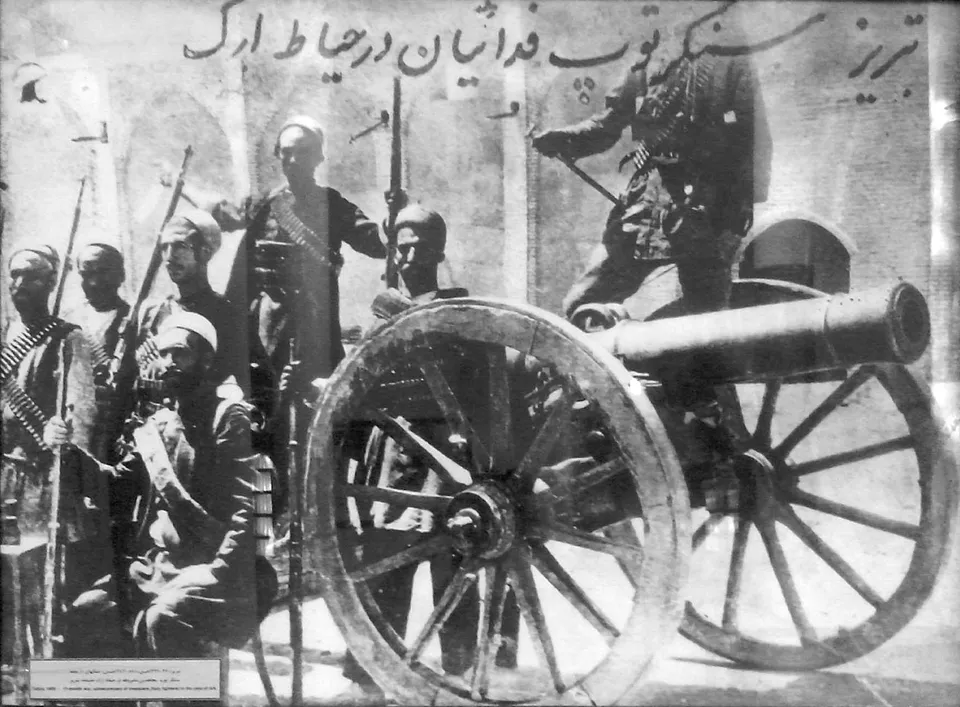
Unknown author · Public domain · Source
The Qajar dynasty had handed one concession after another to Britain and Russia and fallen into debt. When constitutional Japan defeated autocratic Russia in the Russo-Japanese War (1904–1905) and revolution broke out in Russia in 1905, Iranians concluded that a constitution made a nation strong. From late 1905 merchants and clergy staged protests and sit-ins, and in the summer of 1906 a great crowd took sanctuary in the British legation in Tehran.
In August 1906 Mozaffar ad-Din Shah agreed to a constitution; the parliament (Majlis) opened in October and the constitution was proclaimed at the end of the year. But the Anglo-Russian Convention of 1907 divided Iran into a Russian sphere in the north and a British sphere in the south-east. In 1908 the new shah, backed by Russia, shelled the parliament, but constitutionalists in Tabriz and elsewhere fought back and retook Tehran in 1909. In 1911 Russian intervention forced the Majlis to close, and the revolution was defeated.