Blue-and-white Porcelain
Also called: Cheonghwa baekja
White porcelain painted with blue cobalt before firing. In the 15th century the costly imported pigment was reserved mostly for the court; from the 18th century it spread widely.
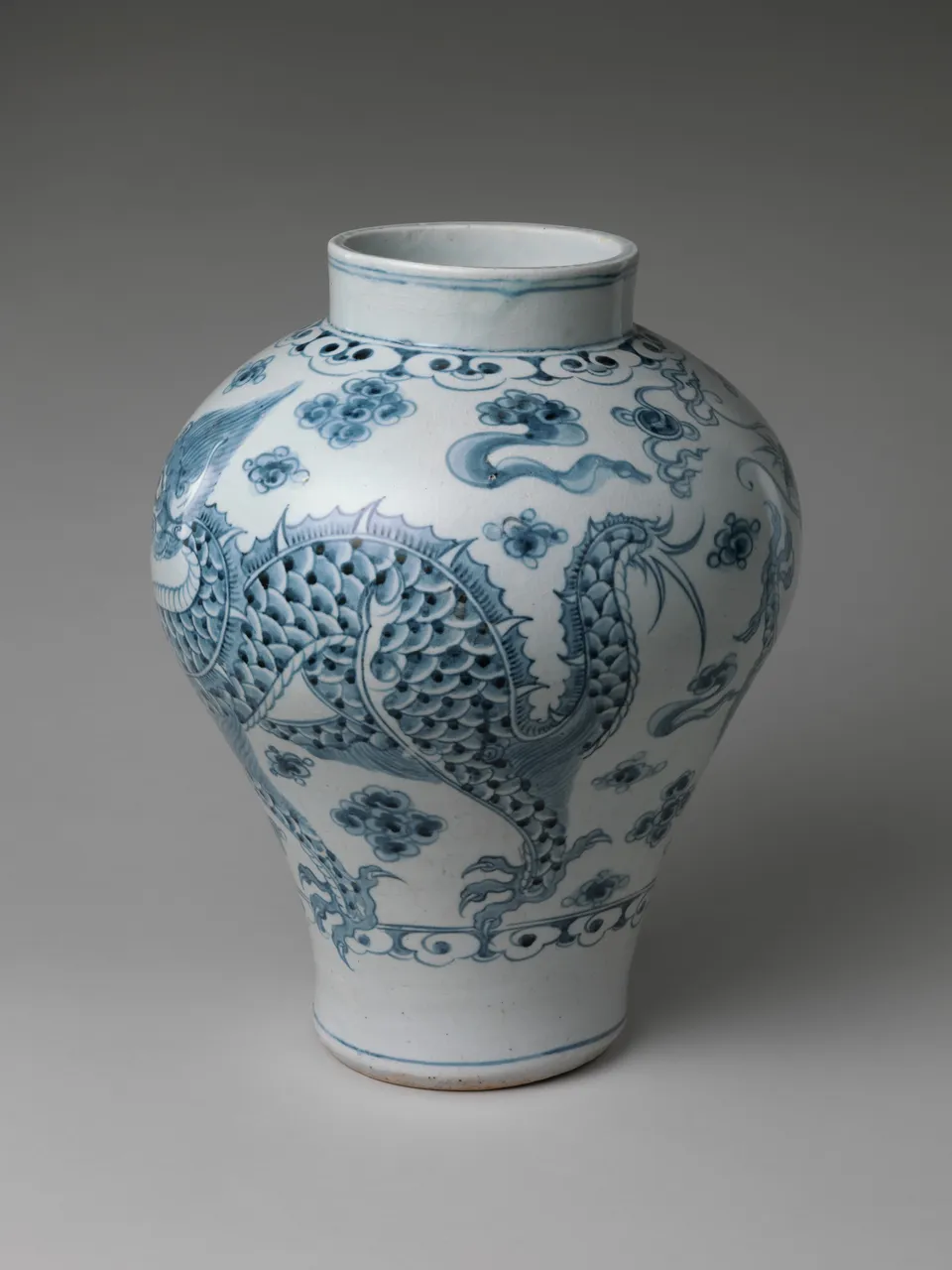
Designs are painted on the porcelain in cobalt blue before glazing and firing. The pigment came from West Asia by way of China and was called “Muslim blue”. In the 15th century it was so precious that it was used mainly by the court and government offices; the jar with plum and bamboo design (National Treasure) is a masterpiece of that time.
In the 18th century the Gwangju branch kilns produced it in quantity and it became fashionable, with painterly designs of landscapes, the Four Gentlemen and the tiger and magpie, on jars as well as water droppers, brush holders and tableware. In the 19th century well-off commoners used it too.