Kimjang Culture
Also called: Gimjang, Kimchi making
The custom of making and sharing large amounts of kimchi with neighbours before winter. Chili-seasoned kimchi spread in late Joseon; it became Intangible Cultural Heritage of Humanity in 2013.
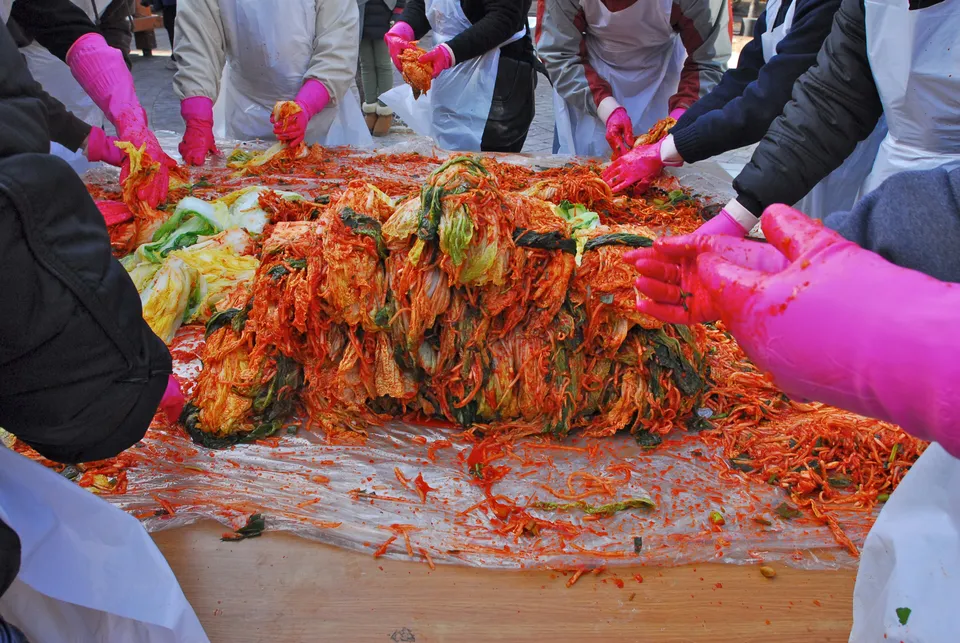
Salting vegetables to last the winter is an old custom: Yi Gyu-bo of Goryeo wrote verses on turnips pickled in sauce or salt for the winter. Chili peppers, introduced around the time of the Imjin War, changed kimchi greatly once they were used in it; chili-seasoned kimchi appears in the mid-18th-century Jeungbo sallim gyeongje (1766).
Kimjang is making a whole winter’s kimchi at once in late autumn. Families and neighbours took turns helping one another and shared the kimchi they made, strengthening community bonds. This sharing and cooperation was recognized when "Kimjang, making and sharing kimchi" was inscribed on UNESCO’s list of the Intangible Cultural Heritage of Humanity in 2013; North Korea’s "Tradition of kimchi-making" was inscribed separately in 2015.