1968 Mexico City Olympics
Also called: Games of the XIX Olympiad, Mexico 1968, Black Power salute
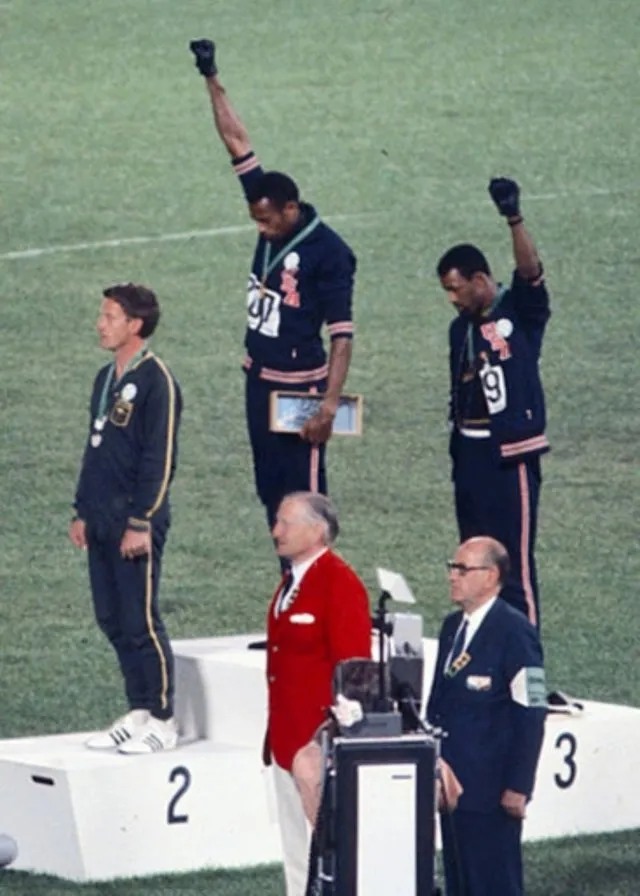
The first Olympics in Latin America. On the medal podium the black American sprinters Tommie Smith and John Carlos raised black-gloved fists in protest against racial discrimination.
Angelo Cozzi ( Mondadori Publishers ) · Public domain · Source
Some 5,500 athletes from 112 nations took part from 12 to 27 October 1968. Ten days before the opening, on 2 October, soldiers and police opened fire on protesting students in the Tlatelolco square of Mexico City, killing many. At an altitude of 2,240 m, sprint and jumping records tumbled; the American Bob Beamon long-jumped 8.90 m, and Dick Fosbury won the high jump going over backwards (the Fosbury flop). East and West Germany sent separate teams for the first time, and drug testing was introduced.
At the medal ceremony for the men’s 200 m on 16 October, the gold medallist Tommie Smith and the bronze medallist John Carlos stood shoeless, raised black-gloved fists and bowed their heads during the American anthem. For this gesture of solidarity with the American civil rights movement the IOC expelled them from the Olympic Village. The silver medallist, the Australian Peter Norman, joined them by wearing a human rights badge and was criticised at home. South Korea’s boxer Jee Yong-ju won a silver medal.