Accession of King Muyeol
On Queen Jindeok’s death Kim Chun-chu took the throne — the first king from the jingol rank after the seonggol line died out.
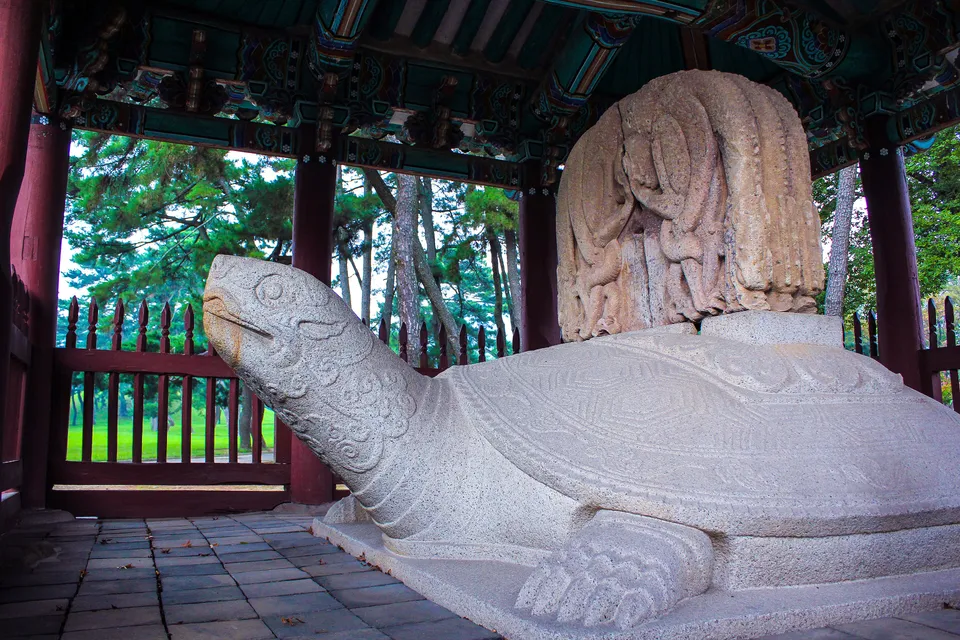
Maria Teresa Dayo · CC BY-SA 4.0 · Source
When Queen Jindeok died in 654, no male of the seonggol rank remained. The nobles first chose the sangdaedeung Alcheon, who declined and recommended Kim Chun-chu. A grandson of King Jinji, Kim had married Kim Yu-sin’s sister Munhui and was allied with Kim Yu-sin’s faction.
On his accession Muyeol had the legal codes of the Ibangbu revised into some sixty articles. The chancellor (sijung) of the royal secretariat (Jipsabu) grew in power while the head of the noble council lost influence, strengthening the crown. The period when his direct descendants reigned, down to King Hyegong, is called Middle Silla.
Allied with Tang, he destroyed Baekje in 660 and died the next year. He was the first Silla king to receive a temple name, Taejong; of his stele in Gyeongju only the tortoise base and dragon capstone survive.