Politics7 November 1917 (25 October, Old Style)

October Revolution

Also called: Bolshevik Revolution

The Bolsheviks led by Lenin overthrew the Provisional Government in an armed rising and set up a Soviet government — the world’s first socialist regime.
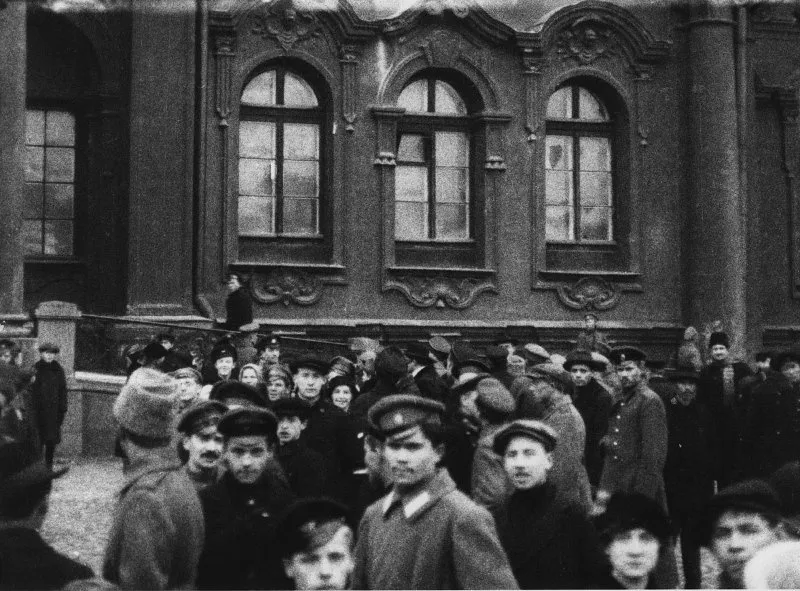
The Winter Palace after its capture, Petrograd, morning of 26 October 1917 (Old Style)

Pyotr Novitsky · Public domain · Source

On 7 November 1917 (25 October in the Russian calendar) the Military Revolutionary Committee of the Petrograd Soviet, directed by Trotsky, sent Red Guards and soldiers to seize the bridges, stations and telegraph offices. That night, signalled by a shot from the cruiser Aurora, the Winter Palace where the Provisional Government sat was taken, and Kerensky fled.

The All-Russian Congress of Soviets set up a Council of People’s Commissars chaired by Lenin as the government and adopted the Decree on Peace, proposing an immediate end to the war, and the Decree on Land, handing the landlords’ estates to the peasants. Banks and large factories were then nationalized.

When the Bolsheviks won only a minority in the Constituent Assembly elected in November, they dissolved it in January 1918, setting Russia on the road to one-party dictatorship. The government moved the capital to Moscow and hurried to make peace with Germany. Civil war against the new regime’s enemies soon followed.

The map in 1917

OpenFreeMap © OpenMapTiles © OpenStreetMap contributors

States at the time
Russia
Places
Saint Petersburg

People

  • Vladimir Lenin1870 – 1924

    leader · Leader of the Bolsheviks who set up the Soviet government in the October Revolution of 1917, chaired it, and founded the USSR in 1922

  • Leon Trotsky1879 – 1940

    leader · Bolshevik leader who directed the armed rising of the October Revolution, negotiated with Germany as foreign commissar, and built the Red Army that won the Civil War

  • Alexander Kerensky1881 – 1970

    related figure · Minister of justice and war and then prime minister (1917) of the Provisional Government after the February Revolution; he kept Russia in the war and was overthrown in October

Before and after

Related works

Themes that include this event

  • World War I and the Russian Revolution1908 – 1923

    From the Balkan crises to a war of trenches and total mobilization that toppled four empires; the Russian Revolution it unleashed, which created the first socialist state; and the Versailles settlement of national self-determination and the League of Nations