Russian Revolution
The tsarist monarchy fell and the Bolsheviks seized power. The Soviet Union was founded in 1922.
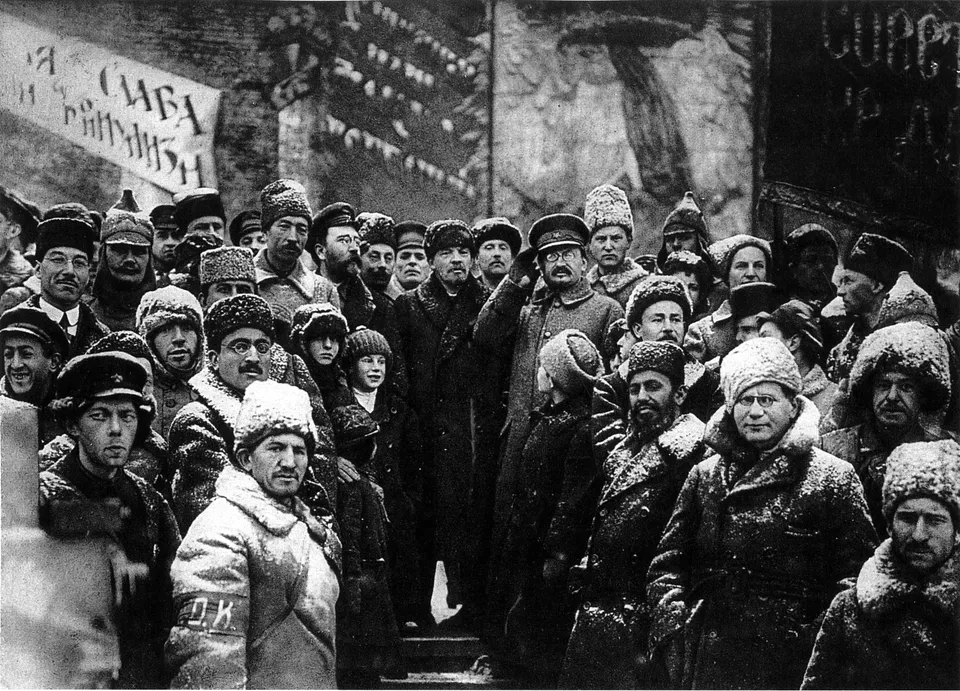
L.Y. Leonidov · Public domain · Source
Under tsarist autocracy Russia’s peasants remained poor even after the emancipation of the serfs (1861), and late industrialisation swelled the working class. "Bloody Sunday" in 1905, during the Russo-Japanese War, set off a revolution that won a parliament (the Duma), but autocracy continued. Defeats in the First World War and worsening food shortages brought discontent to a head.
In March 1917 (February in the old Russian calendar) workers and soldiers in Petrograd rose up, Nicholas II abdicated and the Romanov dynasty ended (the February Revolution). When the Provisional Government kept fighting the war, Lenin, back from exile, raised the slogan "All power to the Soviets", and in November (October, Old Style) the Bolsheviks overthrew the Provisional Government in an armed uprising (the October Revolution).
The Bolshevik government nationalised the land for the peasants to use, nationalised the banks and major industries, and made peace with Germany in 1918. After winning a civil war against counter-revolutionary forces and foreign intervention, it founded the Union of Soviet Socialist Republics (USSR) in 1922.
The Russian Revolution created the world’s first socialist state and began the 20th-century confrontation between capitalism and socialism. The Comintern (1919), founded by Lenin, supported national movements in the colonies, influencing Korean socialist movements in the Russian Far East and elsewhere and the founding of the Chinese Communist Party.