The Oracle of Delphi
Also called: Delphic oracle, Pythia
From about the 8th century BC the Pythia, priestess of Apollo, gave oracles at Delphi on the slopes of Mount Parnassus. Greek cities and foreign kings came to consult her before founding colonies or going to war, and the place was held to be the “navel” of the Greek world.
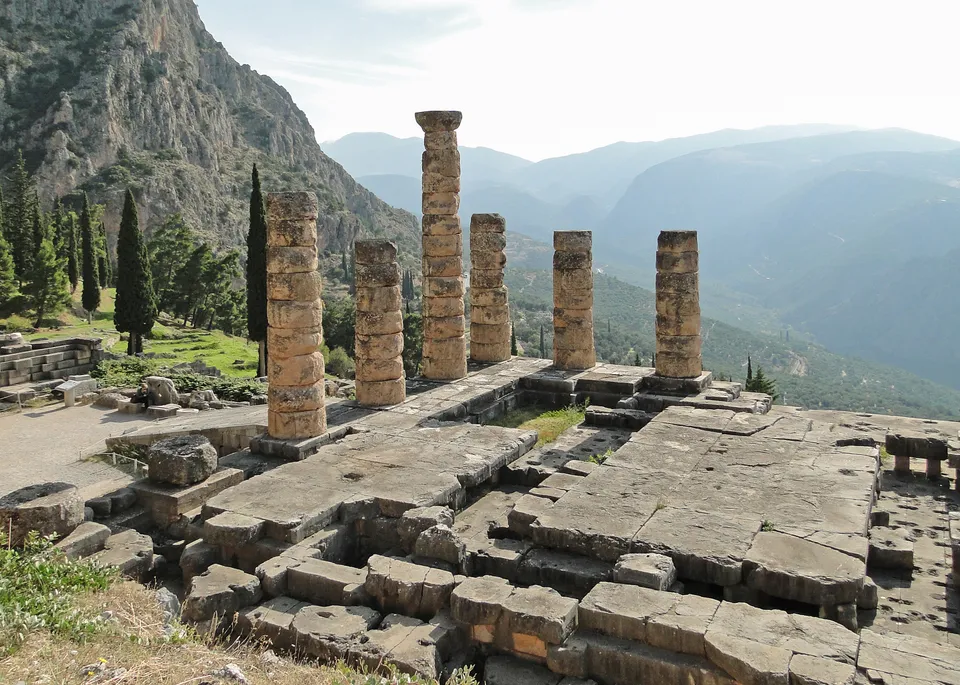
Bernard Gagnon · CC BY-SA 4.0 · Source
The sanctuary of Apollo at Delphi was famous as an oracle by the 8th century BC at the latest. The priestess, the Pythia, sat on a tripod in the inner chamber of the temple and spoke the will of Apollo, which priests were said to put into verse. Greek poleis consulted it before founding colonies overseas or deciding on war and laws, and foreign kings such as Croesus of Lydia sent rich offerings. “Know thyself” was said to be inscribed at the temple. Because two eagles sent by Zeus from the ends of the earth were said to have met here, the sanctuary kept the omphalos, the stone “navel” of the world.
From the early 6th century BC the Pythian Games, with athletic and musical contests, were held every four years. The temple of Apollo burned in 548 BC and was rebuilt with the help of the Athenian Alcmaeonid family; after an earthquake destroyed it in 373 BC, a new temple was built in the 4th century, whose remains stand today. The oracle came to an end in the late 4th century AD under Theodosius I.
The ancient story that the Pythia was inspired by vapours rising from the earth was dismissed as invention after French excavators in the late 19th century found no chasm. Around 2001 the geologist Jelle de Boer and colleagues revived it, pointing to faults beneath the temple and ethylene in spring water, but this is disputed. Delphi became a UNESCO World Heritage Site in 1987.