Rice Riots of 1918
Also called: Rice Riots, Kome sōdō
As rice prices soared, riots that began in the summer of 1918 among women of fishing villages in Toyama spread across Japan, bringing down the Terauchi cabinet and bringing in Hara Takashi’s party cabinet.
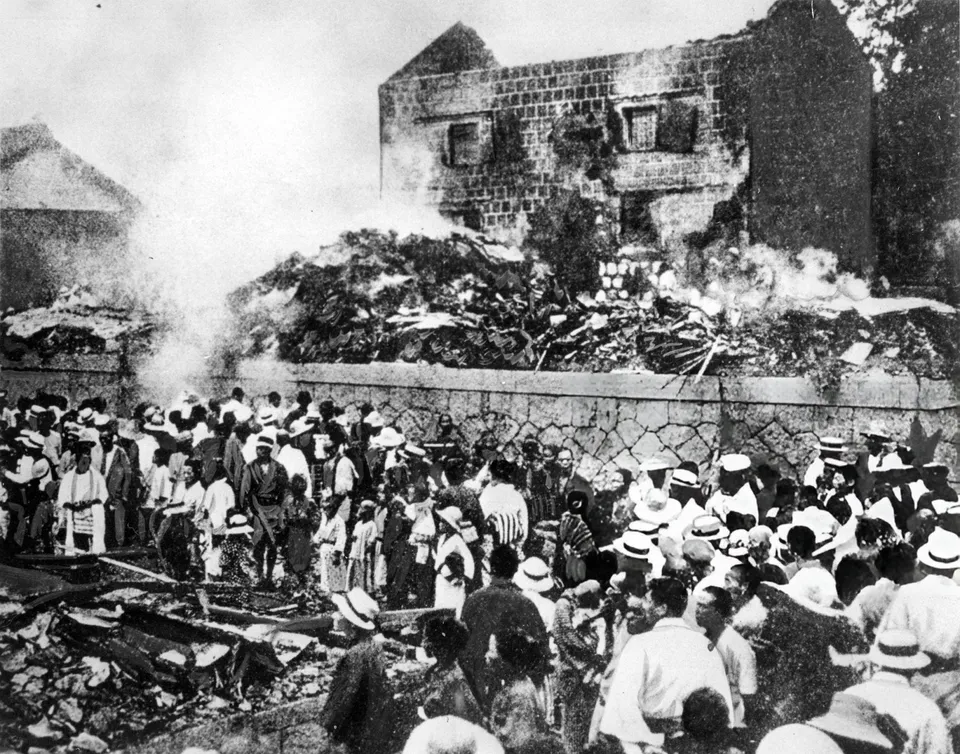
Unknown, originally published in Asahi Shimbun · Public domain · Source
The First World War boom pushed up prices and swelled the cities, and when merchants and landlords hoarded rice ahead of the Siberian Intervention in 1918, its price more than doubled in a year. In late July women in Uozu and other fishing towns in Toyama tried to stop rice being shipped out; the news spread through the press, and in August riots attacking rice dealers and wealthy houses broke out in hundreds of places including Tokyo and Osaka. The government sent in troops to suppress them.
Taking responsibility, the cabinet of Terauchi Masatake, former Governor-General of Korea, resigned in September, and Seiyūkai president Hara Takashi formed a cabinet with party members in nearly every post. Japan set out to cover its food shortage from its colonies, and from 1920 the Plan to Increase Rice Production in Korea shipped large amounts of Korean rice to Japan.