Retreat of the Republic of China Government to Taiwan
Also called: Great Retreat, Kuomintang retreat to Taiwan, Battle of Guningtou
Defeated in the civil war, the Republic of China government moved to Taipei in December 1949. Somewhat over a million soldiers, officials and their families crossed from the mainland, and Chiang Kai-shek resumed the presidency in Taipei in March 1950.
Winter 2011 · Public domain · Source
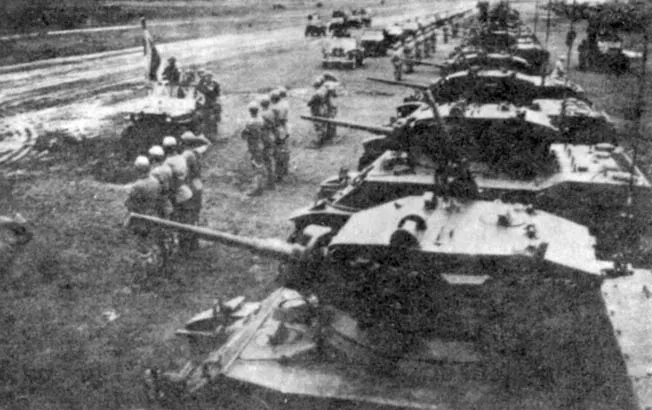
Having lost Nanjing, the National Government moved from Guangzhou to Chongqing and Chengdu, and on 7 December 1949 the Executive Yuan decided to relocate to Taipei. Chiang Kai-shek flew from Chengdu to Taiwan on 10 December. From early 1949 treasures of the Palace Museum and the gold reserves of the Central Bank had already been shipped to Taiwan, and roughly one to two million soldiers, officials and family members (estimates vary) crossed the Strait.
In October 1949 Nationalist forces threw back a PLA landing at Guningtou on Kinmen, so Kinmen and Matsu stayed in Republic of China hands, but Hainan fell to the PLA in May 1950. Chiang resumed the presidency on 1 March 1950. When the Korean War broke out in June, the United States sent the Seventh Fleet into the Taiwan Strait, halting the PLA’s plans to invade Taiwan.
On Taiwan, martial law declared in May 1949 lasted until 1987, and the Republic of China held China’s seat at the United Nations until 1971. The cross-Strait relationship between the People’s Republic on the mainland and the Republic of China on Taiwan dates from this time.