Culturec. 1281

Iryeon’s Samguk yusa

The monk Iryeon compiled the Samguk yusa, recording the Dangun founding legend of Gojoseon, Buddhist history, folk tales and hyangga songs — an assertion of Korean historical identity under Yuan domination.
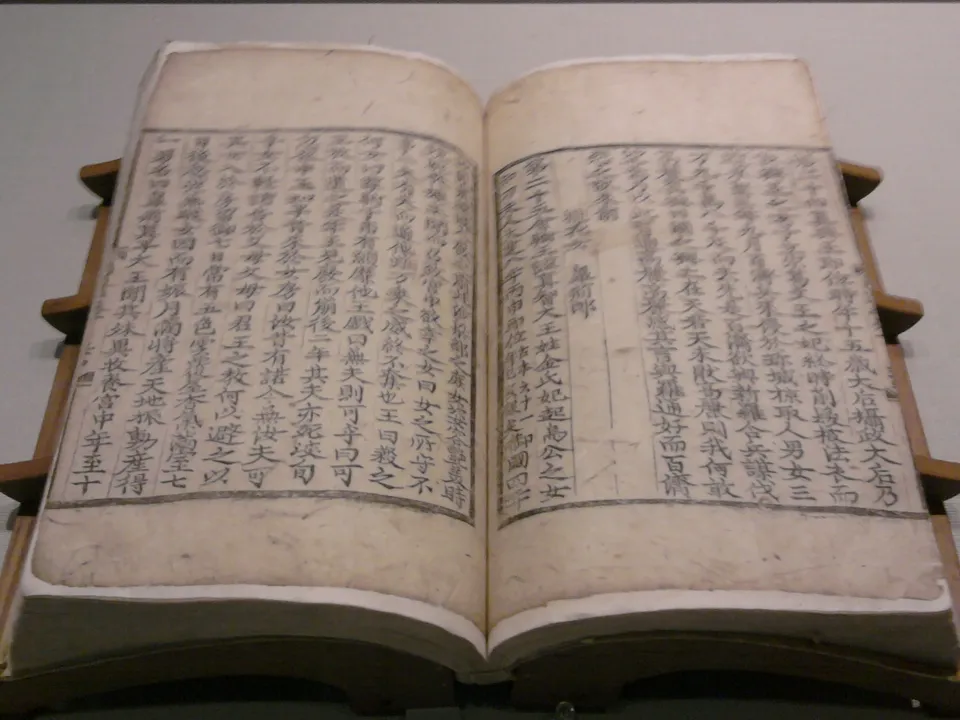
Samguk Yusa (Memorabilia of the Three Kingdoms), Kyujanggak Institute, Seoul National University

Salamander724 · Public domain · Source

The Samguk yusa was the first work to record the Dangun legend, tracing Korean history back to Gojoseon. It preserves the myths, legends, Buddhist stories and fourteen hyangga omitted by the Samguk sagi, making it invaluable for early literature and belief. Its exact date is unknown; it is thought to have been compiled around 1281, in Iryeon’s last years at Ingaksa in Gunwi.

Yi Seung-hyu’s Jewang ungi (1287) likewise made Dangun the founder of Korean history and set it in verse alongside Chinese history. Both reflect a sense of national identity under Yuan interference.

The map in 1281

OpenFreeMap © OpenMapTiles © OpenStreetMap contributors

States and rulers at the time
Goryeo — King Chungnyeol

People

  • Iryeon1206 – 1289

    author · Monk who compiled the Samguk yusa, preserving the Dangun legend, Buddhist history and folk tales

  • King Chungnyeol1236 – 1308

    monarch · Twenty-fifth king of Goryeo and the first to marry a Yuan princess; Goryeo was drawn into the invasions of Japan

Before and after

Related works

Themes that include this event

  • Writing Korean HistoryAD 375 – 1931

    From the Seogi, Guksa and Sinjip to the Joseon sanggosa — history-writing as royal display, Confucian record, assertion of independence and nationalist scholarship