Schliemann Excavates Troy
Also called: Priam’s Treasure, Excavation of Hisarlik
From 1871 the German businessman Heinrich Schliemann dug into the mound of Hisarlik in the Ottoman Empire and announced that he had found Homer’s Troy. In 1873 he found a hoard of gold he named “Priam’s Treasure”, but it came from a layer more than a thousand years older than the Trojan War.
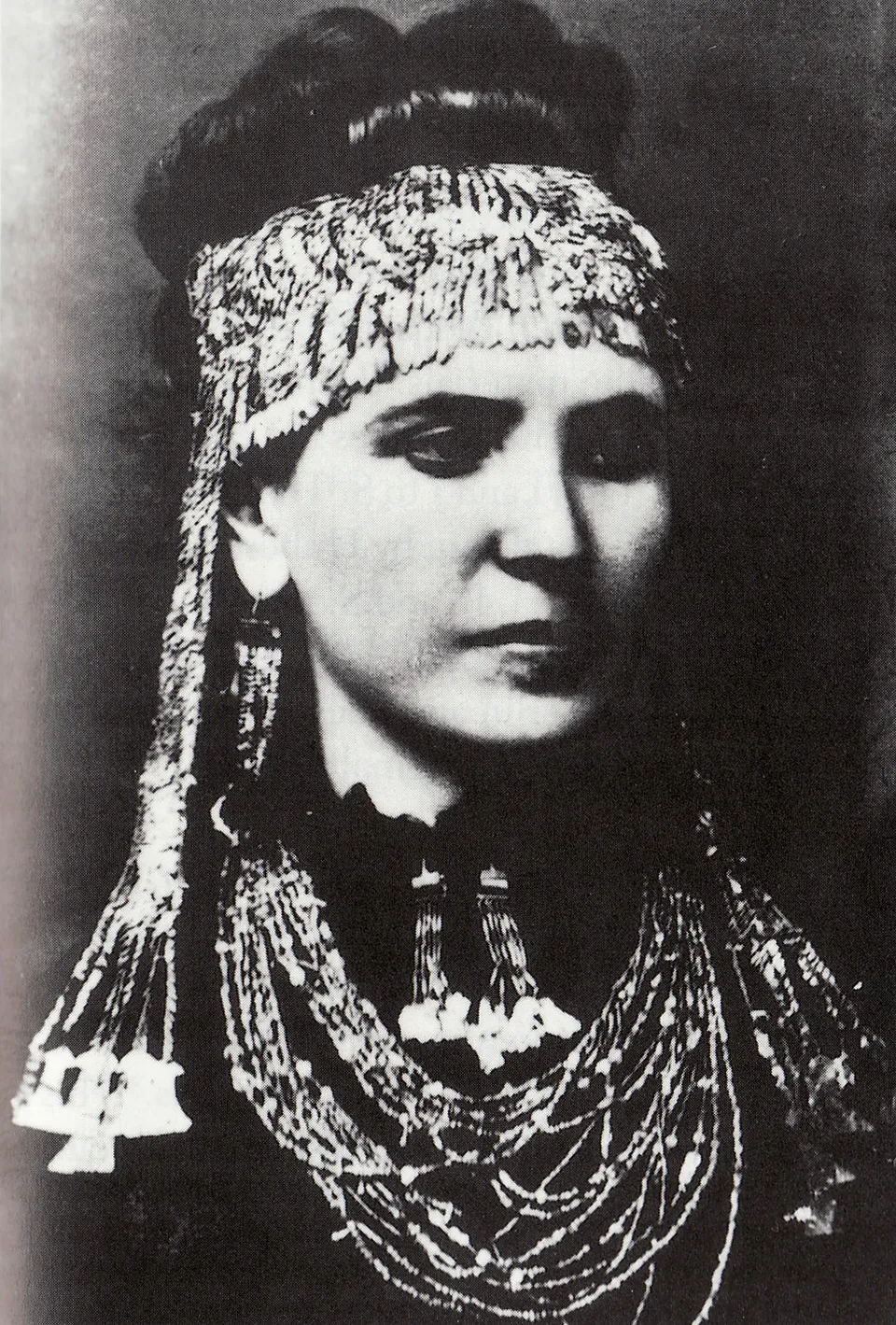
Elizabeth Simpson · Public domain · Source
Heinrich Schliemann, who later recalled believing Homer’s stories as a child, turned to archaeology after making a fortune in trade. The idea that Hisarlik was Troy came first from Frank Calvert, an Englishman who owned part of the mound and had made trial digs in the 1860s; on Calvert’s advice Schliemann excavated on a large scale from 1871 to 1873 with Ottoman permission (and again in 1878–79, 1882 and 1890). He cut a great trench through the mound from north to south and found several cities one above another, but in doing so destroyed much of the upper layers — including those of the time of the Trojan War.
At the end of May 1873 he found a hoard of gold diadems, earrings and cups, named it “Priam’s Treasure” and smuggled it out of the Ottoman Empire to Greece; a photograph of his wife Sophia wearing the jewels went round the world. But Troy II, where the hoard was found, dates to about 2500–2300 BC, more than a thousand years before the Trojan War. The treasure was given to Berlin in 1881, taken by the Soviet army in 1945, and revealed in the 1990s to be in the Pushkin Museum in Moscow.
His methods and the accuracy of his reports are criticised, but his excavations made Homer’s Troy a subject for archaeology. Wilhelm Dörpfeld, Carl Blegen, Manfred Korfmann and others continued the work and corrected the dating of the layers.