Scramble for Concessions
Also called: Partition of China, Breakup of China, Carving up the melon
After the Sino-Japanese War, in 1897–1898 Germany leased Jiaozhou Bay, Russia Lüshun and Dalian, Britain Weihaiwei and the New Territories of Kowloon, and France Guangzhouwan, each marking out a sphere of influence. In China this was called guafen — “carving up the melon”.
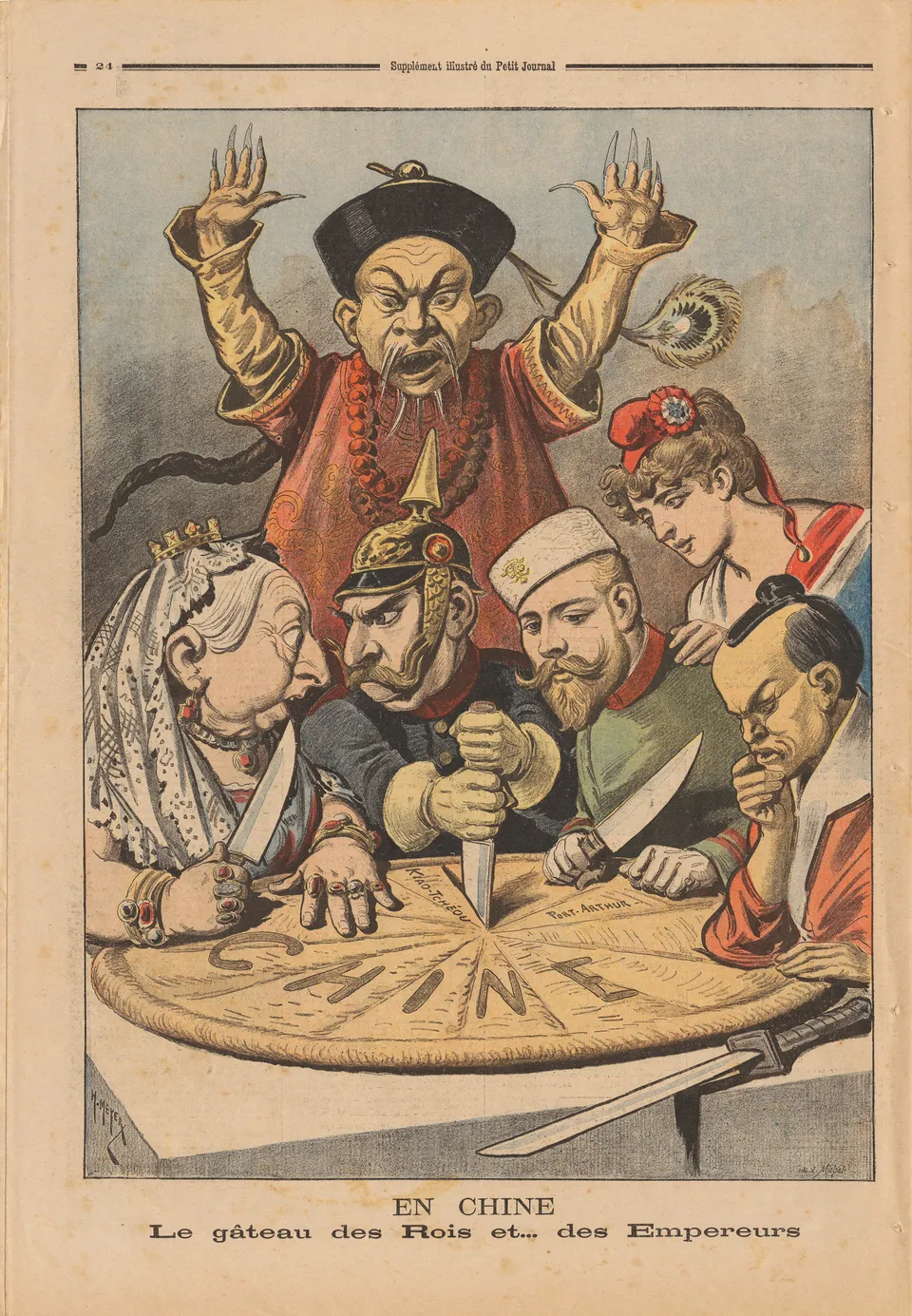
Henri Meyer · Public domain · Source
Once China had lost to Japan, the powers came to see it as theirs to divide. In November 1897, after two German missionaries were murdered in Shandong, Germany seized Jiaozhou Bay; the next year it took a 99-year lease and built Qingdao.
In 1898 Russia leased Lüshun and Dalian at the tip of the Liaodong peninsula — the very land it had made Japan give back in the Triple Intervention. Britain leased Weihaiwei and the New Territories of Kowloon, and France Guangzhouwan. Competing for railway and mining rights, the powers marked out spheres: Russia in Manchuria, Germany in Shandong, Britain in the Yangtze valley, France in Yunnan and Guangxi in the south, Japan in Fujian.
A latecomer, the United States in 1899 issued Secretary of State Hay’s “Open Door” notes, insisting that all nations should trade in China on equal terms. Faced with the danger of partition, voices for reform grew louder within China.