China · History1861 – 190120 events

The Last Half-Century of the Qing

From the Self-Strengthening Movement to the Boxer Protocol — forty years in which a Qing China trying to learn Western technology lost to France and Japan, was carved up by the powers and saddled with indemnities it could not pay
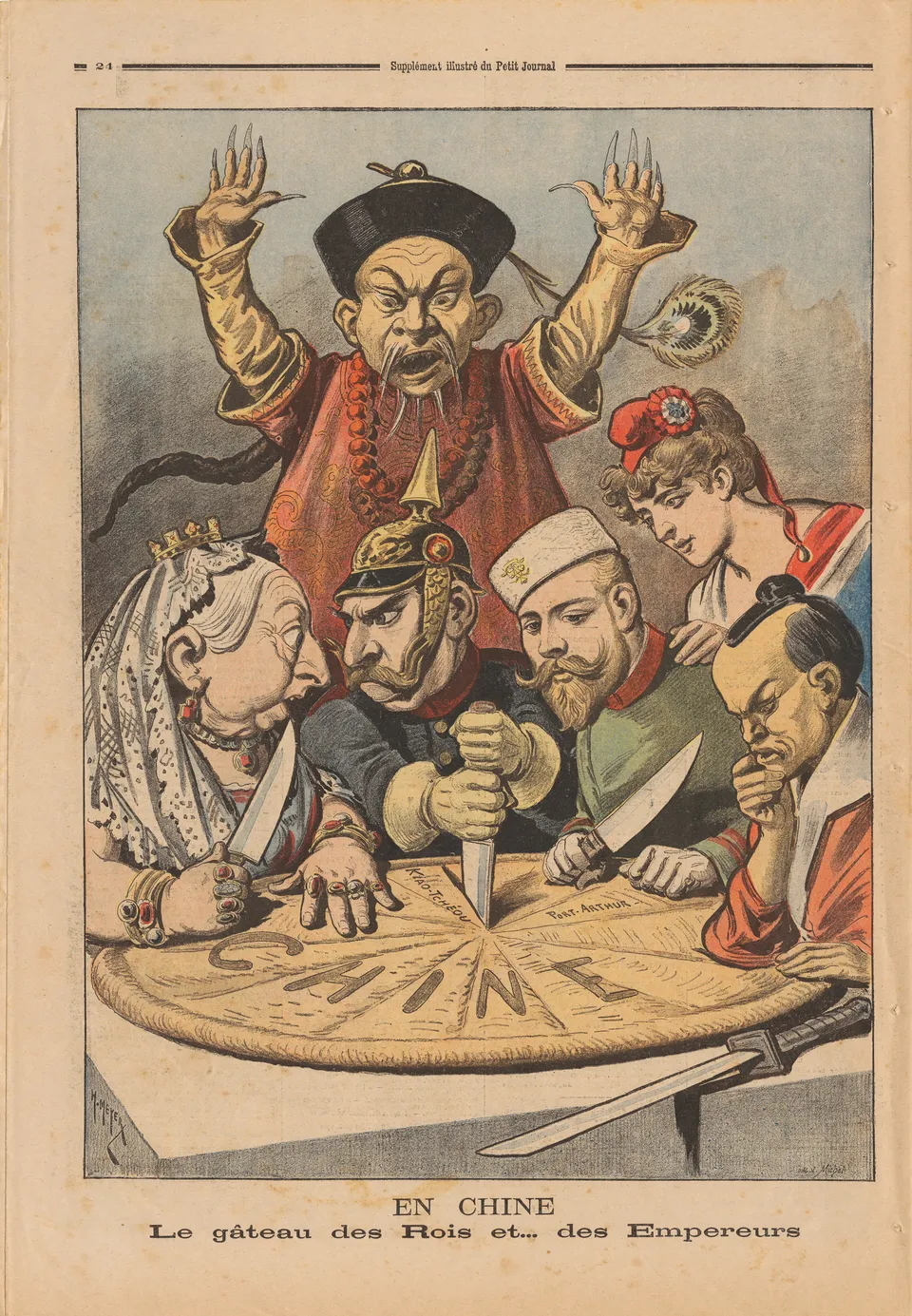
「중국 — 왕과 황제들의 케이크」. 열강이 중국을 나누는 풍자화, 『르 프티 주르날』 1898년 1월

Henri Meyer · Public domain · Source
The theme on the map

OpenFreeMap © OpenMapTiles © OpenStreetMap contributors

20 events in this theme

  1. When the Xianfeng Emperor died at Rehe in 1861, eight ministers led by Sushun became regents for the six-year-old Tongzhi Emperor. In November the two empresses dowager, Ci’an and Cixi, joined Prince Gong to overthrow them and began to rule from behind the screen.

  2. Han Chinese officials who had crushed the Taiping adopted Western arms and technology under the slogan "Chinese learning as substance, Western learning for use", founding arsenals, shipyards and modern enterprises. Defeats by France and Japan exposed its limits.

  3. In 1865 Zeng Guofan and Li Hongzhang founded the Jiangnan Arsenal in Shanghai, a modern arms works that built guns, cannon and steamships, and translated Western books on science and technology.

  4. Citing the murder of Ryukyuan castaways by Indigenous Taiwanese, Japan sent troops to southern Taiwan — the Meiji government’s first overseas military expedition.

  5. In 1876–1878 a Qing army led by Zuo Zongtang destroyed Yakub Beg’s state and reconquered Xinjiang. The Ili region, occupied by Russia, was mostly returned by the Treaty of Saint Petersburg in 1881.

  6. Japan abolished the Ryukyu Kingdom, which had owed allegiance to both Qing China and Satsuma, and made it Okinawa Prefecture — a sign that the China-centred tributary order was beginning to crumble.

  7. Old-style soldiers angry over unpaid wages rose up and attacked the Japanese legation. The Daewongun briefly returned to power until Qing troops seized him.

  8. After the Imo Incident, Qing imposed trade regulations declaring Korea its dependency and letting Chinese merchants open shops in Seoul and trade inland.

  9. On 23 August 1884 Admiral Courbet’s French Far East squadron attacked the Qing Fujian Fleet at anchor at Mawei near Fuzhou, sinking almost all of it in under an hour, and shelled the Foochow Navy Yard.

  10. 1884 – 1885Sino-French War

    China and France fought over suzerainty in Vietnam. China lost its claim to Vietnam, and in the meantime the Gapsin Coup broke out in Korea.

  11. After the Gapsin Coup, Li Hongzhang of Qing and Itō Hirobumi of Japan agreed to withdraw both armies from Korea and to notify each other before sending troops again.

  12. In 1888 the Beiyang Fleet that Li Hongzhang had built up became a regular navy. Led by the German-built ironclads Dingyuan and Zhenyuan, it was counted the strongest in Asia, but afterwards it bought almost no new ships.

  13. Peasant armies led by Jeon Bong-jun rose against corrupt officials and foreign powers, triggering the First Sino-Japanese War.

  14. Qing and Japan fought over Korea. Victorious at Pungdo, Seonghwan, Pyongyang and the Yellow Sea, Japan ended Qing suzerainty over Korea and took Taiwan in the Treaty of Shimonoseki.

  15. On 17 September 1894, off the mouth of the Yalu, the Japanese Combined Fleet fought the Beiyang Fleet and sank five of its ships. Japan lost none and won command of the Yellow Sea.

  16. The treaty that ended the Sino-Japanese War gave Japan Taiwan and a huge indemnity, but the Triple Intervention of Russia, Germany and France forced it to return the Liaodong Peninsula. The powers then scrambled to lease Chinese territory.

  17. After the Sino-Japanese War, in 1897–1898 Germany leased Jiaozhou Bay, Russia Lüshun and Dalian, Britain Weihaiwei and the New Territories of Kowloon, and France Guangzhouwan, each marking out a sphere of influence. In China this was called guafen — “carving up the melon”.

  18. Kang Youwei and Liang Qichao persuaded the Guangxu Emperor to launch reforms toward a constitutional monarchy on the Meiji model, but Empress Dowager Cixi’s coup ended them after about a hundred days.

  19. Under the slogan "Support the Qing, destroy the foreigners", the Boxers attacked churches and railways and besieged the foreign legations in Beijing. An eight-nation alliance occupied Beijing, and by the Boxer Protocol China paid a vast indemnity and accepted foreign troops on its soil.

  20. Treaty signed on 7 September 1901 between China and eleven powers. China was to pay 450 million taels of silver over 39 years — more than 980 million with interest — and accept foreign troops in the Beijing Legation Quarter and between Beijing and the sea.

Key people

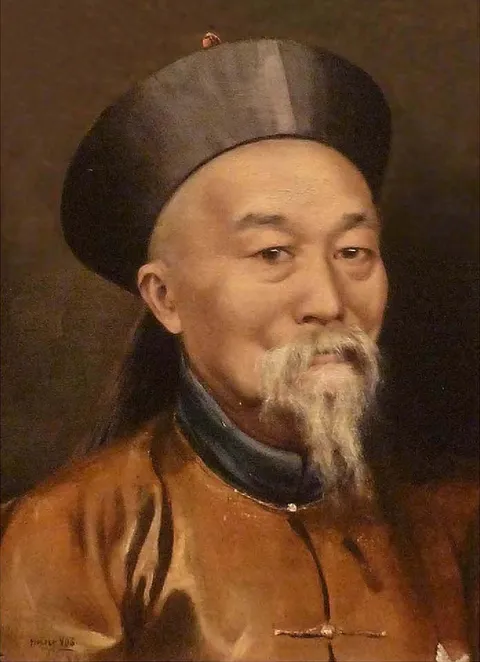
  • Li Hongzhang1823 – 1901

    Qing viceroy who steered policy toward Korea after 1882 and signed the Tianjin Convention and the Treaty of Shimonoseki with Itō Hirobumi

  • Empress Dowager Cixi1835 – 1908

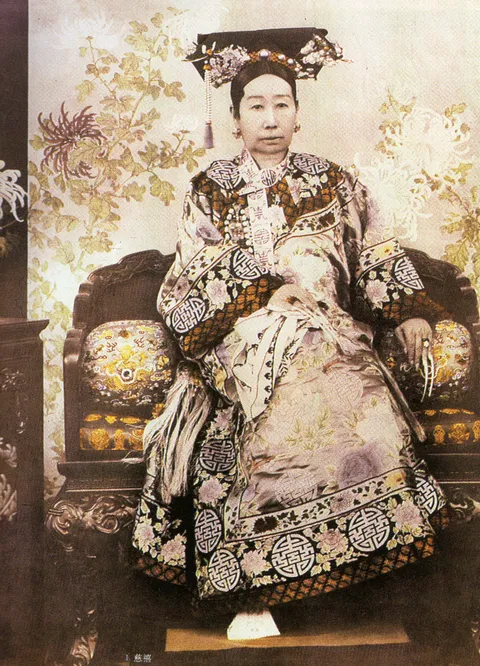
    Consort of the Xianfeng Emperor and mother of the Tongzhi Emperor who held real power in Qing China for nearly half a century and crushed the 1898 reforms

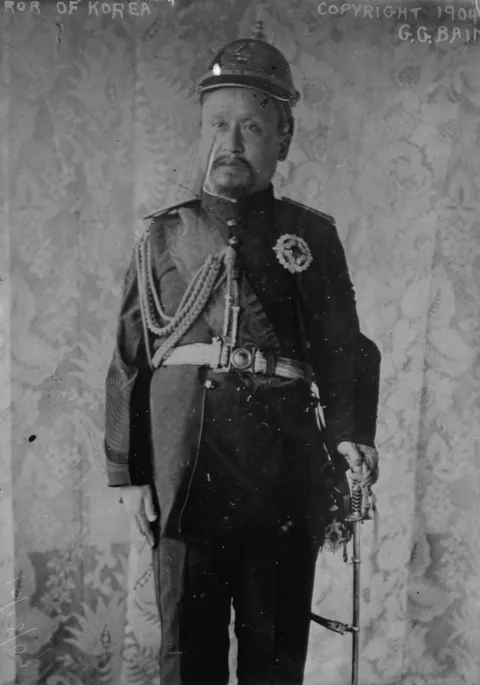
  • Gojong1852 – 1919

    Twenty-sixth king of Joseon and first emperor of the Korean Empire

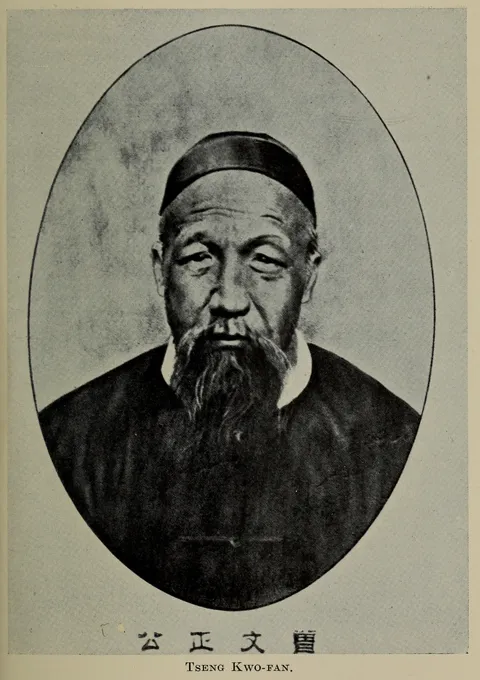
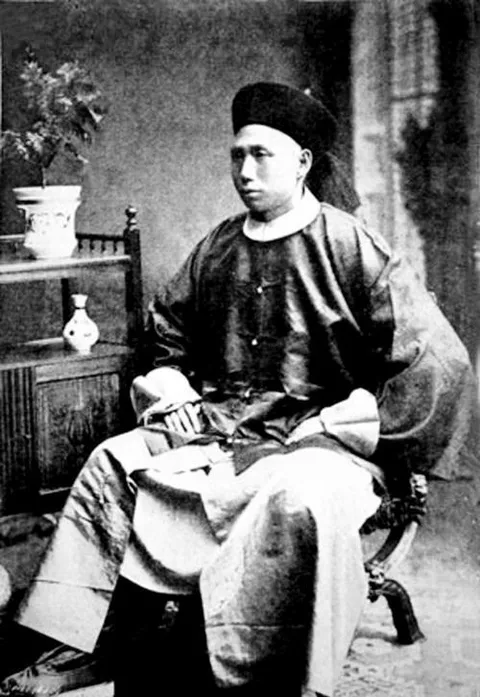
  • Zeng Guofan1811 – 1872

    Han Chinese official who raised the Xiang Army to crush the Taiping and launched the Self-Strengthening Movement

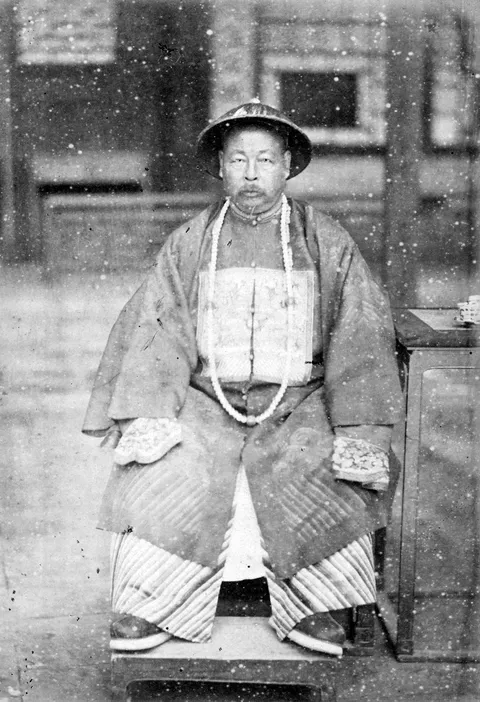
  • Zuo Zongtang1812 – 1885

    Late Qing Han Chinese statesman and general who helped crush the Taiping, founded the Foochow Navy Yard and in 1876–1878 overthrew Yakub Beg and reconquered Xinjiang

  • Itō Hirobumi1841 – 1909

    First prime minister of Japan who forced the 1905 protectorate treaty and became the first Resident-General; shot by Ahn Jung-geun at Harbin

  • Ding Ruchang1836 – 1895

    Admiral of the Beiyang Fleet who fought the Japanese at the Yalu in 1894 and, besieged at Weihaiwei in 1895, accepted surrender and took his own life

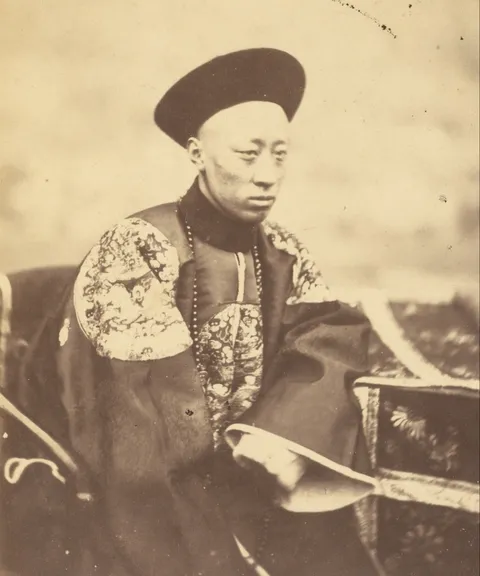
  • Prince Gong (Yixin)1833 – 1898

    Son of the Daoguang Emperor and brother of Xianfeng, who stayed in Beijing in 1860 when the emperor fled, signed the Convention of Beijing, and from 1861 led the Zongli Yamen and the Self-Strengthening Movement

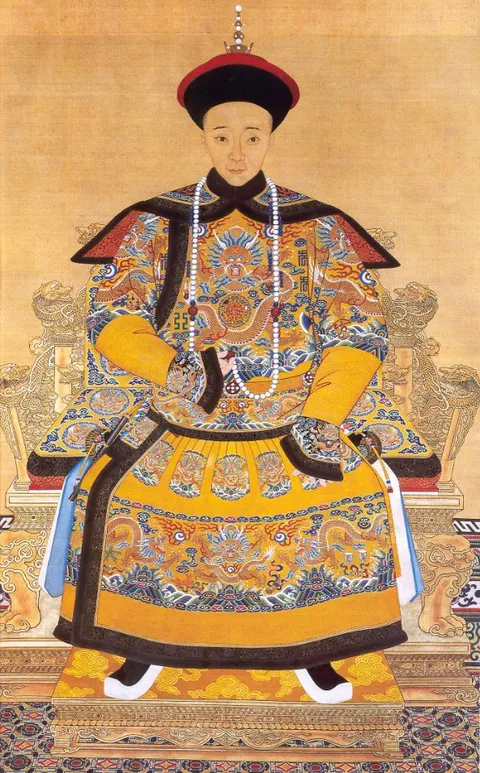
  • Xianfeng Emperor1831 – 1861

    Ninth Qing emperor (r. 1850–1861), who faced the Taiping Rebellion and the Second Opium War, fled to Rehe as Anglo-French forces neared Beijing in 1860, and died there

  • Ōkubo Toshimichi1830 – 1878

    Satsuma statesman who led the early Meiji government, pushing through the abolition of the domains and state-led industry, and opposed invading Korea

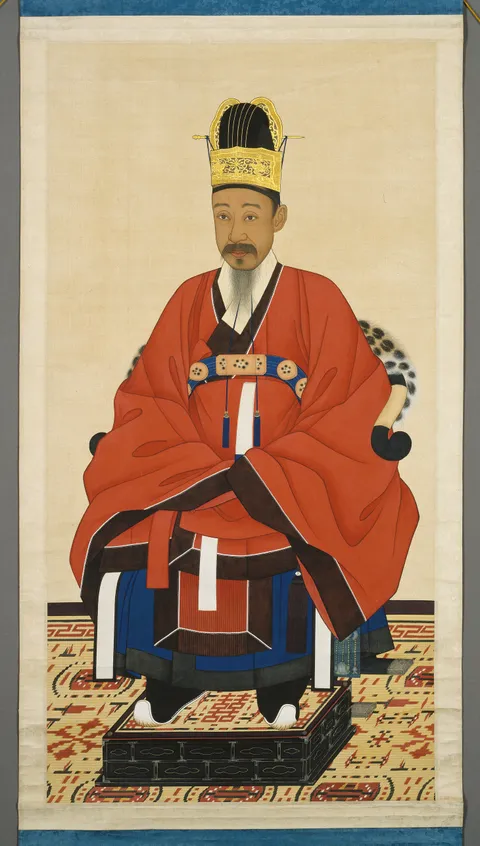
  • Heungseon Daewongun1820 – 1898

    Gojong's father and regent, who rebuilt Gyeongbokgung and rejected Western trade

  • Empress Myeongseong1851 – 1895

    Gojong's queen, who resisted Japanese influence and was assassinated in Gyeongbokgung