Second Voyage of Columbus
Columbus crossed the Atlantic again with 17 ships and some 1,200 men and founded the settlement of La Isabela on Hispaniola. Forcing tribute in gold and shipping natives as slaves, he set off the collapse of the Taíno.
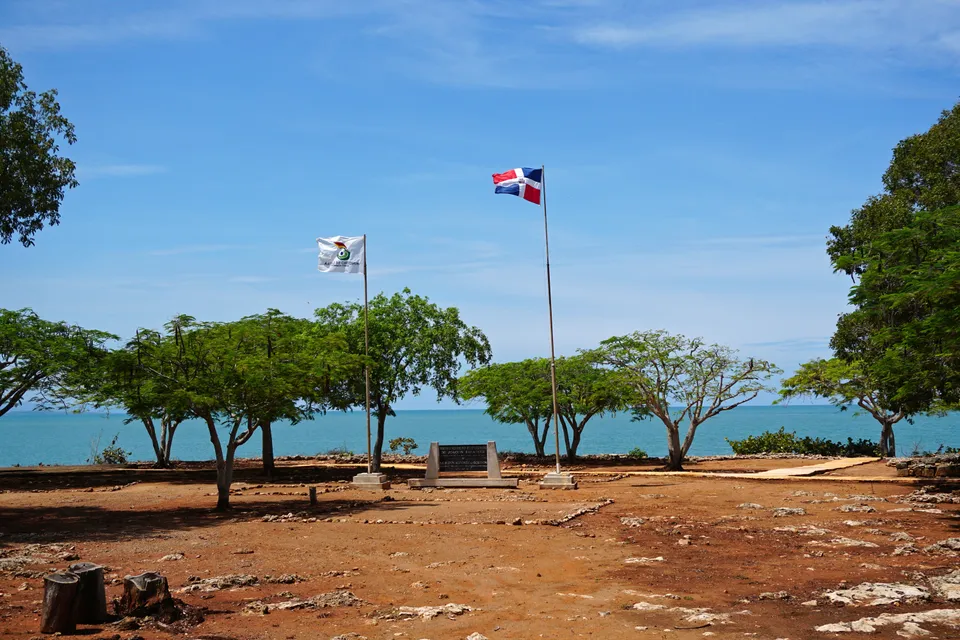
Mariordo (Mario Roberto Durán Ortiz) · CC BY-SA 4.0 · Source
Leaving Cádiz in September 1493, the second voyage was a colonial enterprise rather than an expedition. Its 17 ships carried soldiers, farmers, craftsmen and priests, with horses, cattle and pigs, sugarcane and wheat. Columbus passed through the Lesser Antilles (Dominica, Guadeloupe) and Puerto Rico to Hispaniola, found La Navidad destroyed, and in January 1494 founded the town of La Isabela on the north coast. He went on to explore southern Cuba and Jamaica, making his crews swear that Cuba was the Asian mainland.
When gold fell short of hopes, Columbus required every Taíno over fourteen to deliver a fixed quantity of gold every three months and crushed resistance by force. In 1495 he shipped some 500 people to Spain as slaves; Queen Isabella disapproved and had some sent back. Forced labour, famine and European diseases reduced the Taíno of Hispaniola, once in the hundreds of thousands, almost to nothing within thirty years. Facing settlers’ complaints and royal suspicion, Columbus returned to Spain in 1496.