Battle of Sekigahara and the Founding of the Edo Shogunate
Also called: Tokugawa shogunate, Edo bakufu
In 1600 Tokugawa Ieyasu defeated Ishida Mitsunari’s Western Army at Sekigahara, and in 1603 he became shogun and established his government at Edo. The Edo shogunate lasted some 260 years, until 1867.
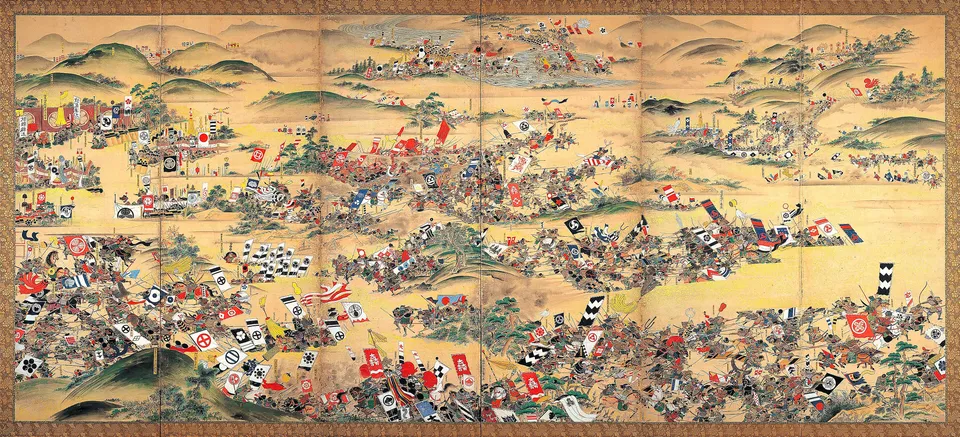
Collection of The City of Gifu Museum of History · Public domain · Source
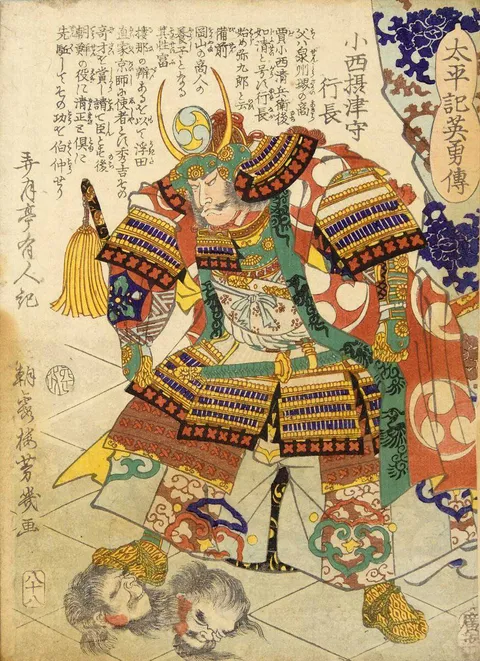
When Toyotomi Hideyoshi died in 1598, Tokugawa Ieyasu, the most powerful of the Five Elders appointed to guard his young son Hideyori, moved to take control. Ishida Mitsunari rallied the western daimyo against him (the Western Army), and in 1600 the two sides met at Sekigahara in Mino. When Kobayakawa Hideaki of the Western Army changed sides in mid-battle, Ieyasu’s Eastern Army won in a single day. Konishi Yukinaga, a vanguard commander in the invasion of Korea, fought for the West and was executed.
In 1603 Ieyasu was appointed seii taishōgun (shogun) and set up his government at Edo (today’s Tokyo). In 1605 he passed the office to his son Hidetada to show that it would be hereditary in the Tokugawa house, and in the Osaka campaigns of 1614–1615 he destroyed the Toyotomi. The Edo shogunate went on to give Japan some 260 years without major war, until the return of power to the emperor in 1867.
Ieyasu sought to restore relations with Korea; that he had sent no troops to the Imjin War was one reason Joseon could deal with him. Joseon sent the monk Yujeong (Samyeong) in 1604 to assess the situation, sent an embassy in 1607 to restore relations, and in 1609 concluded the Giyu Treaty with Tsushima, reopening trade at the Japan House in Busan.