Fall of Vicksburg
Also called: Siege of Vicksburg, Vicksburg campaign
Grant’s army besieged the Mississippi River fortress of Vicksburg for 47 days and forced its surrender; the Union gained control of the Mississippi, cutting the Confederacy in two.
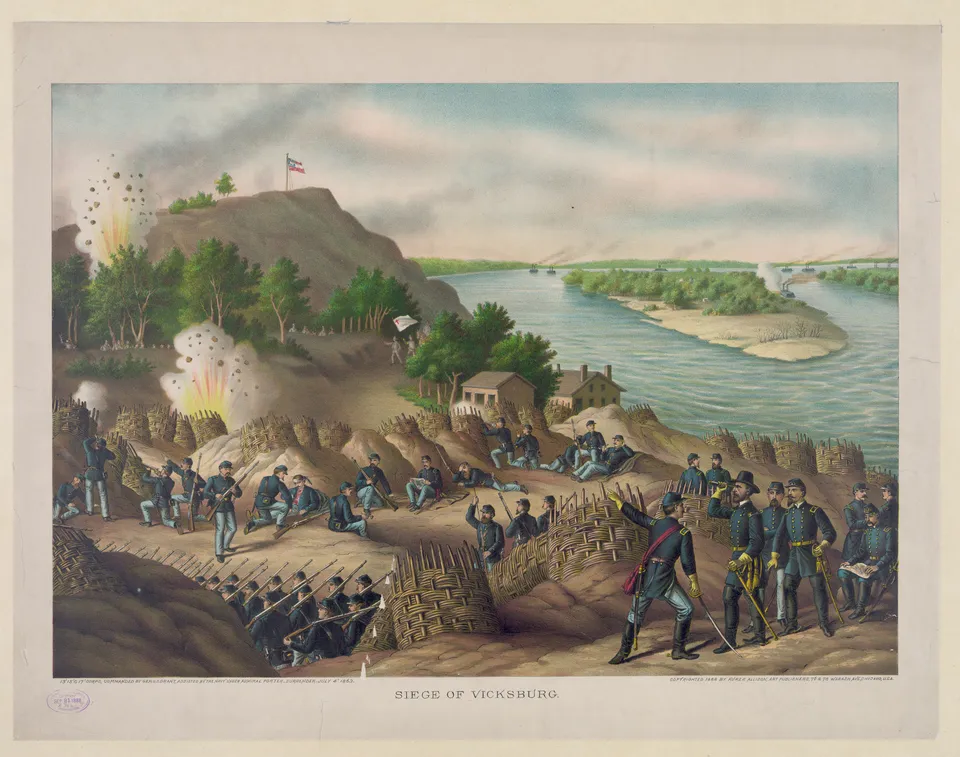
Kurz & Allison. · Public domain · Source
Perched on bluffs above the river, Vicksburg was the Confederacy’s last great fortress blocking the Mississippi. In spring 1863 Ulysses S. Grant marched down the west bank, crossed below the city and swung inland to approach it from the rear. After two assaults failed he laid siege from 18 May, and residents dug caves in the hillsides to escape the shelling.
Starving, John C. Pemberton’s garrison of about 29,000 surrendered on 4 July. With the fall of Port Hudson on 9 July the Union held the whole Mississippi, severing Texas, Arkansas and Louisiana from the rest of the Confederacy; “The Father of Waters again goes unvexed to the sea,” Lincoln wrote. Together with Gettysburg it turned the tide of the war, and made Grant the Union’s leading commander.