Battle of Gettysburg
Also called: Pickett’s Charge
Lee’s army, invading Pennsylvania, fought Meade’s Union army for three days and lost when Pickett’s Charge collapsed — the largest battle of the war and its turning point.
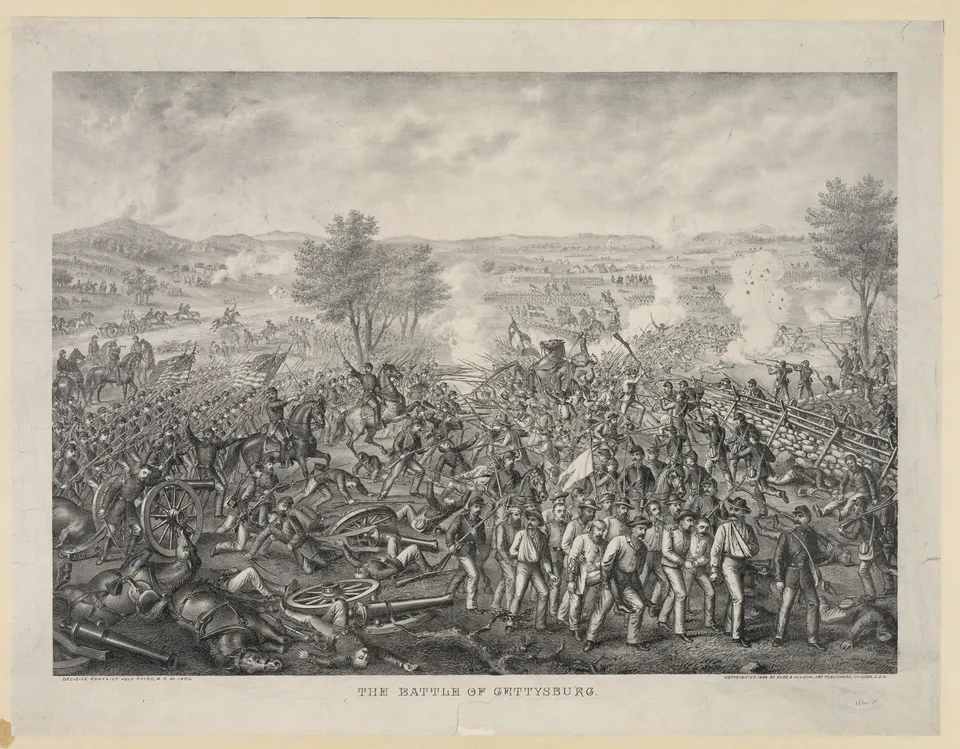
Popular Graphic Arts · Public domain · Source
In June 1863 Lee entered Pennsylvania seeking a decisive victory on Northern soil. The two armies collided by chance near Gettysburg on 1 July, and George G. Meade, in command of the Army of the Potomac for only three days, took up position on Cemetery Ridge and the hills south of town. On 2 July the Confederates struck Little Round Top and both Union flanks but could not break through.
On 3 July Lee sent about 12,500 men straight at the Union centre (Pickett’s Charge); more than half fell and the rest fell back. The three days cost both sides some 50,000 casualties, the most of any battle of the war. Lee retreated to Virginia on 4 July, and the Confederacy never again mounted a major invasion of the North. Vicksburg fell the same day.