Stamp Act
Also called: Stamp Act 1765
To pay the debts of the Seven Years’ War, Parliament required stamps on colonial newspapers, legal papers and even playing cards; the colonists resisted with the cry “No taxation without representation.”
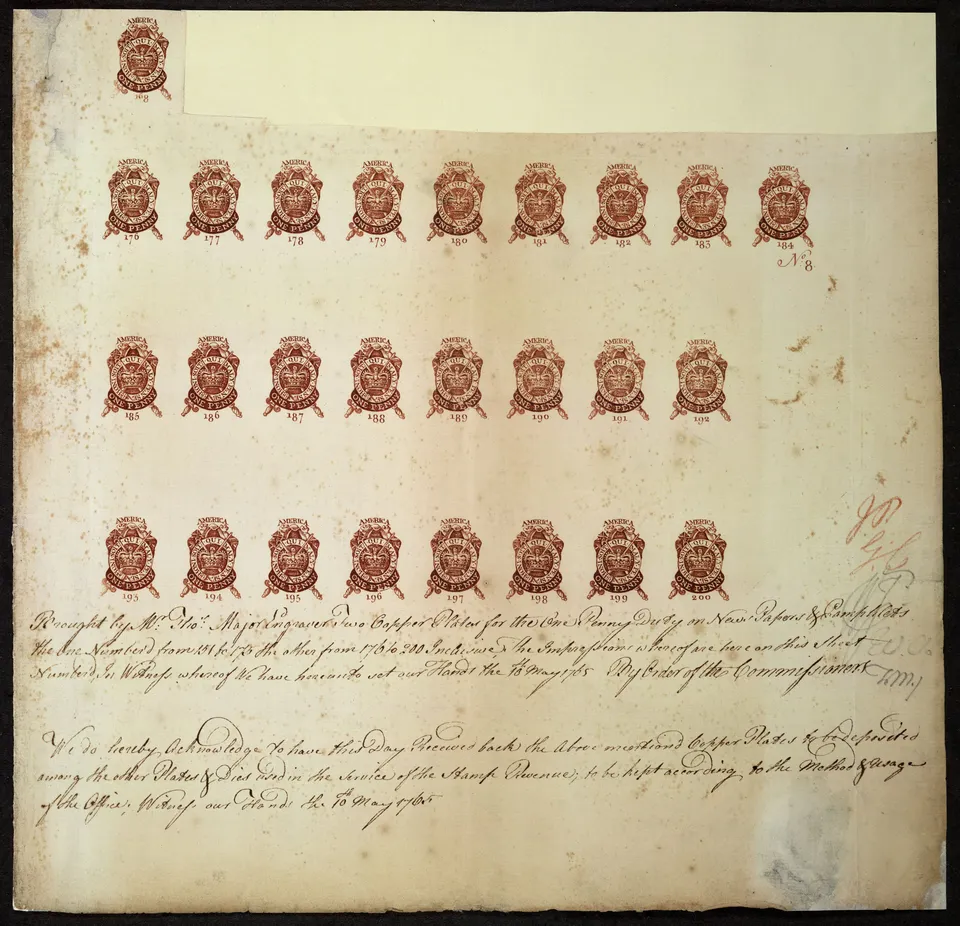
Board of Stamps · Public domain · Source
Victory in the Seven Years’ War (the French and Indian War, 1754–1763) drove France from North America but left Britain deep in debt. Britain’s Proclamation of 1763 reserved the lands west of the Appalachians for Native peoples and barred colonial settlement there, and London wanted the colonies to share the cost of the troops that guarded them. In March 1765 Parliament passed the Stamp Act, requiring paid stamps on newspapers, legal documents, licences and playing cards.
The colonists answered that a Parliament in which they had no elected members could not tax them — “No taxation without representation.” In October delegates of nine colonies met in New York in the Stamp Act Congress, merchants boycotted British goods, and the Sons of Liberty frightened stamp distributors into resigning. Britain repealed the act the following March, but the same day passed the Declaratory Act asserting Parliament’s full authority over the colonies, leaving the quarrel alive.