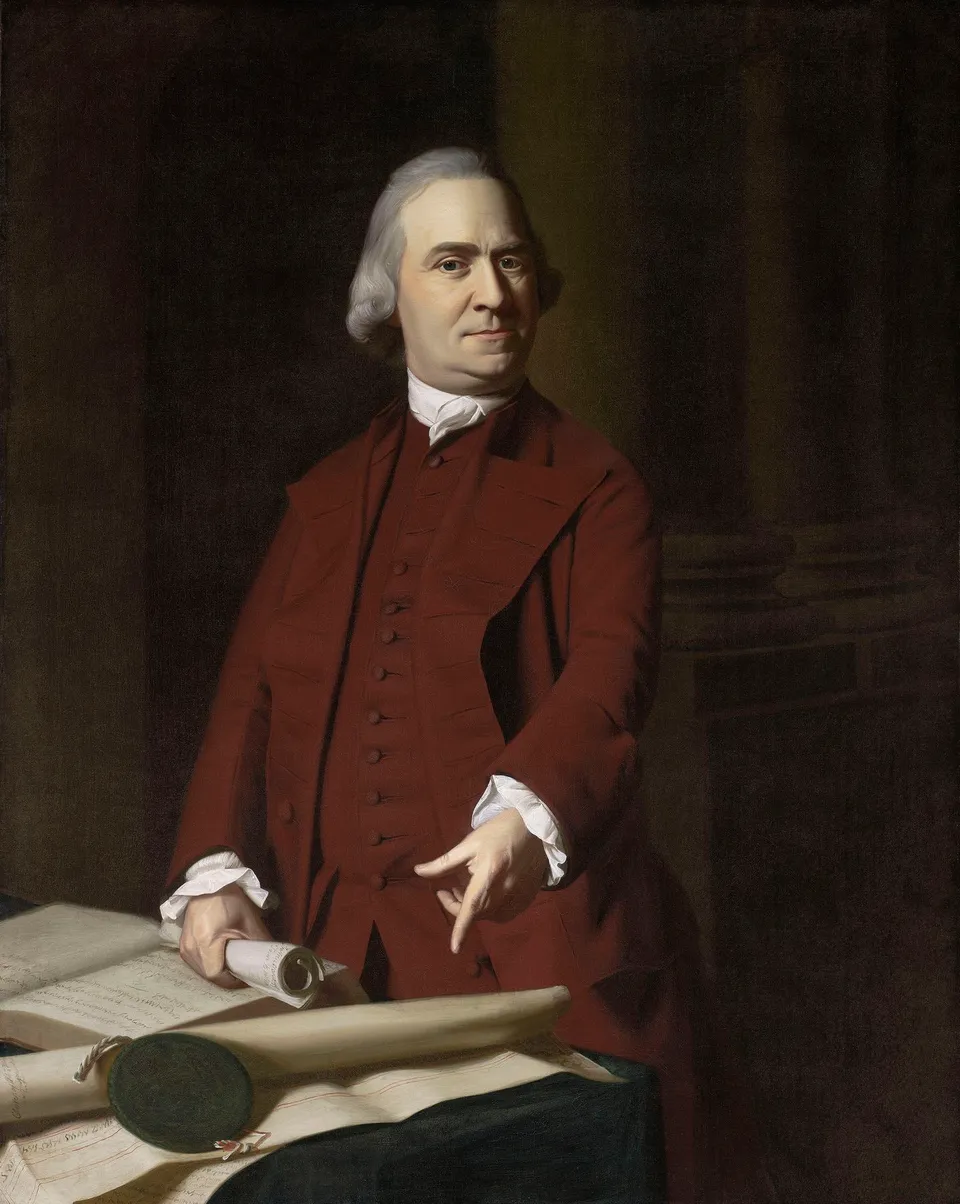
John Singleton Copley · Public domain · Source
Person1722 – 1803
Samuel Adams
Boston politician and leader of the Sons of Liberty against British taxation; a leader of the American Revolution
John Singleton Copley · Public domain · Source
Boston politician and leader of the Sons of Liberty against British taxation; a leader of the American Revolution
To pay the debts of the Seven Years’ War, Parliament required stamps on colonial newspapers, legal papers and even playing cards; the colonists resisted with the cry “No taxation without representation.”
British soldiers quartered in Boston fired into a crowd pelting them with snowballs and insults, killing five people.
When Britain gave the East India Company a monopoly on selling tea in the colonies, Boston colonists disguised as Native Americans dumped the tea from ships in the harbour into the sea.
British regulars sent to seize militia arms at Concord exchanged fire with colonial militia at Lexington and Concord — the first fighting of the American Revolutionary War.
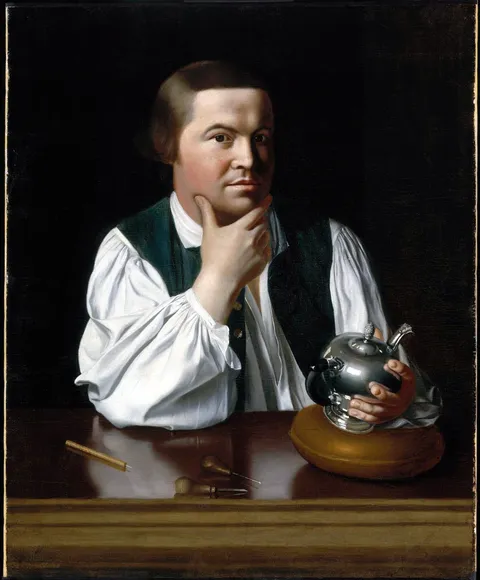
Boston silversmith who rode through the night of 18 April 1775 to warn that the British regulars were coming
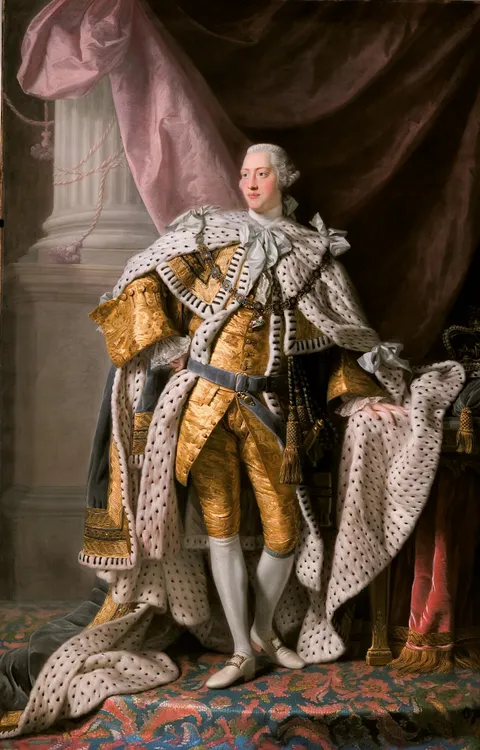
King of Great Britain (r. 1760–1820), in whose reign the thirteen American colonies won independence
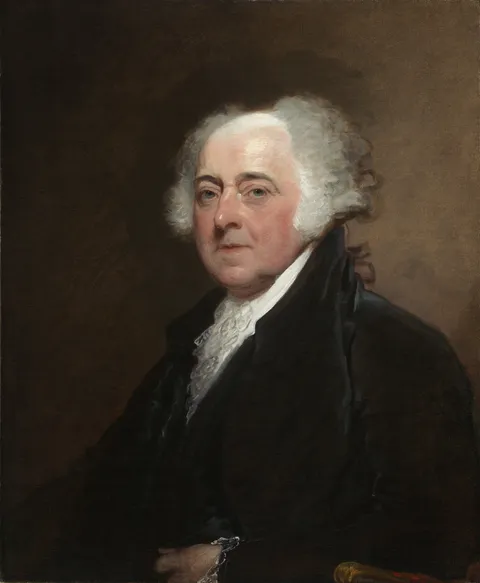
Massachusetts lawyer and statesman who championed independence in Congress, negotiated the Treaty of Paris and became the second US president (1797–1801)
Three centuries in which the Ottomans of Suleiman I, the Mughals of Akbar and the Safavids of Abbas I flourished and then faltered, while across the Atlantic the slave trade and colonies transformed the Americas, leading to American independence
From the Stamp Act to Washington’s inauguration — thirteen colonies that cried “No taxation without representation” fought Britain for eight years, won their independence and framed a new republic under the Constitution