Wegener’s theory of continental drift
Also called: Continental drift
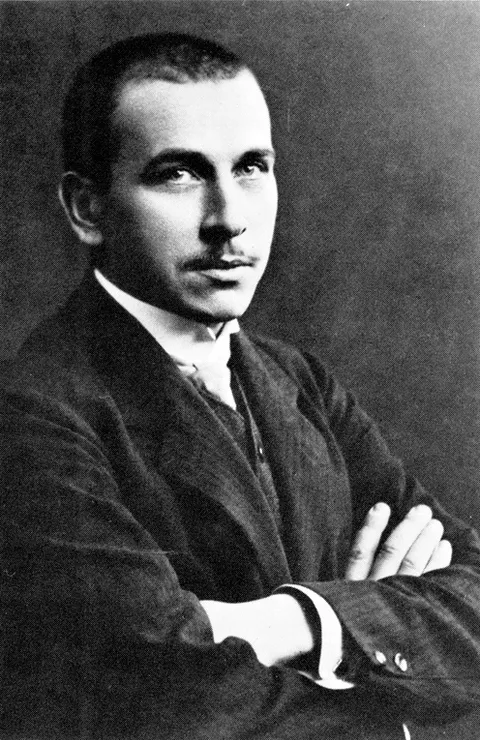
The German meteorologist Alfred Wegener first presented his theory that the continents were once joined and have since drifted apart; half a century later it was accepted as plate tectonics.

Fritz Loewe · Public domain · Source
On 6 January 1912, at a meeting of the Geological Association in Frankfurt’s Senckenberg Museum, Alfred Wegener first presented the idea that the continents move, and in 1915 he published The Origin of Continents and Oceans. His evidence: the coasts of South America and Africa fit like puzzle pieces; fossils of the same freshwater reptile, Mesosaurus, and the same plant, Glossopteris, are found on both; and rock formations and traces of ancient glaciers line up across the oceans.
But he could not explain what moved the continents, and most geologists rejected the idea. Wegener died in 1930 on an expedition across the Greenland ice sheet. In the 1960s, the discovery that new sea floor is born at the ocean ridges and spreads outward (sea-floor spreading) brought continental drift back to life as plate tectonics.