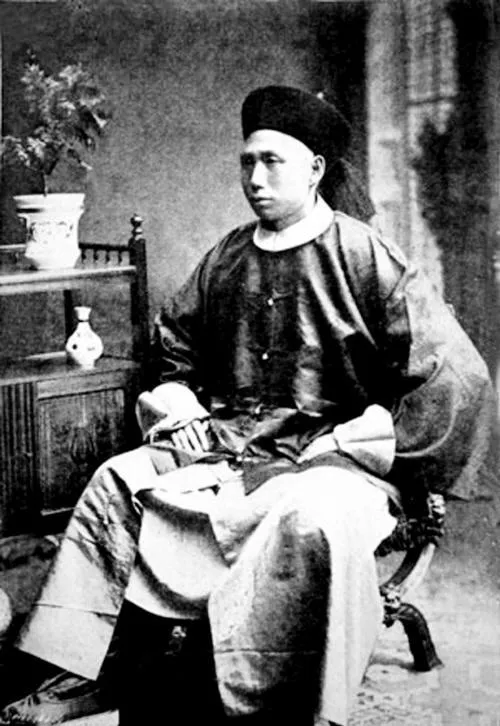
Hayman Seleg Mendelssohn · Public domain · Source
Ding Ruchang
Also called: Ting Ju-ch’ang
Admiral of the Beiyang Fleet who fought the Japanese at the Yalu in 1894 and, besieged at Weihaiwei in 1895, accepted surrender and took his own life
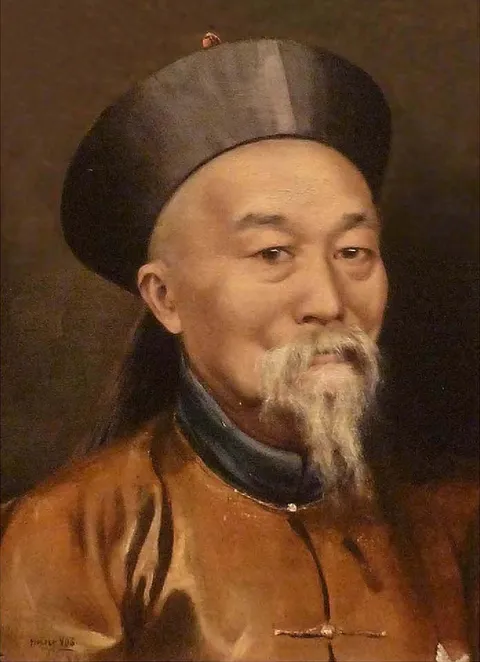
Hayman Seleg Mendelssohn · Public domain · Source
Also called: Ting Ju-ch’ang
Admiral of the Beiyang Fleet who fought the Japanese at the Yalu in 1894 and, besieged at Weihaiwei in 1895, accepted surrender and took his own life
In 1888 the Beiyang Fleet that Li Hongzhang had built up became a regular navy. Led by the German-built ironclads Dingyuan and Zhenyuan, it was counted the strongest in Asia, but afterwards it bought almost no new ships.
On 17 September 1894, off the mouth of the Yalu, the Japanese Combined Fleet fought the Beiyang Fleet and sank five of its ships. Japan lost none and won command of the Yellow Sea.

Qing viceroy who steered policy toward Korea after 1882 and signed the Tianjin Convention and the Treaty of Shimonoseki with Itō Hirobumi
From the Self-Strengthening Movement to the Boxer Protocol — forty years in which a Qing China trying to learn Western technology lost to France and Japan, was carved up by the powers and saddled with indemnities it could not pay