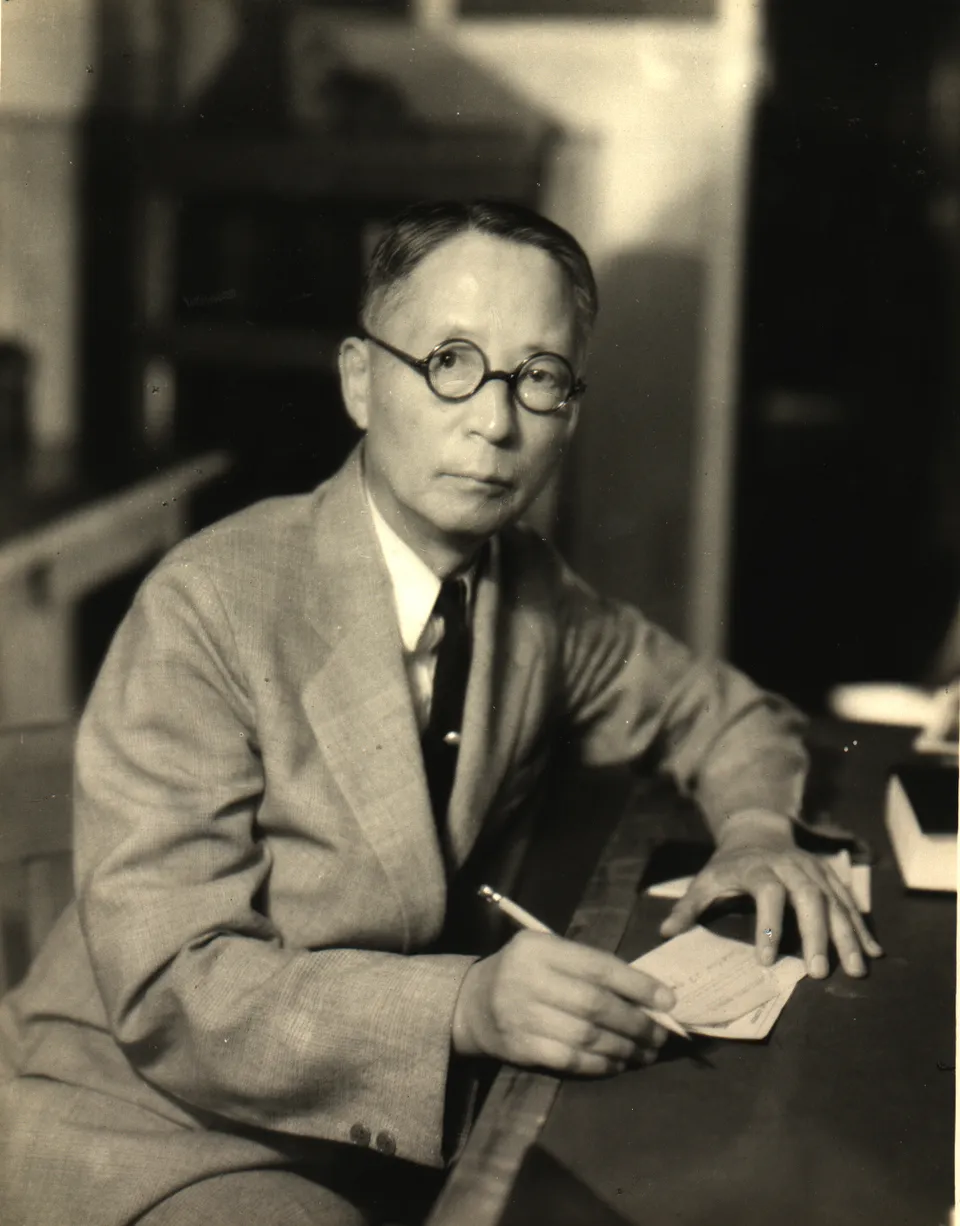
Seo Jae-pil (Philip Jaisohn) during his years as a physician in the US, Independence Hall of Korea

독립기념관 · Public domain · Source

Person1864 – 1951

Seo Jae-pil (Philip Jaisohn)

Joined the 1884 coup, lived in exile in the US, then returned to found The Independent

He studied medicine in the United States and became an American citizen under the name Philip Jaisohn. In 1896, with government support, he founded The Independent in Korean and English editions, formed the Independence Club and built Independence Gate on the site of the Yeongeunmun. He left for the United States again in 1898, and after the March First Movement held a Korean congress in Philadelphia and supported the independence movement through diplomacy.

Where they went

OpenFreeMap © OpenMapTiles © OpenStreetMap contributors

6 related events

  1. 1
    1884Gapsin Coupparticipant

    Kim Ok-gyun and other radical reformers staged a coup at the banquet opening the new post office; Qing troops intervened and it collapsed in three days.

  2. 2

    Seo Jae-pil launched The Independent, the first private newspaper, printed in Hangul and English; its founding day, 7 April, is Korea’s Newspaper Day.

  3. 1896 – 1898Independence Clubleader

    Seo Jae-pil founded the Independence Club with officials and intellectuals; it raised the Independence Gate and held mass assemblies calling for national sovereignty, civil rights and self-strengthening reform.

  4. 3
    1896 – 1897Independence Gate Builtleader

    With public donations the Independence Club built the Independence Gate where the Yeongeunmun had welcomed Chinese envoys; the cornerstone was laid in November 1896 and the gate finished a year later.

  5. 4

    The Independence Club held its first mass rally at Jongno, demanding the recall of Russian military instructors and financial advisers and rejecting Russia’s bid to lease Jeolyeongdo.

  6. 5
    1921 – 1922Washington Naval Conferencerelated figure

    At America’s invitation the powers met in Washington to limit naval armaments and settle Pacific and Chinese questions, creating the Washington system that held Japanese expansion in check in Asia and the Pacific.

People who appear alongside

  • Gojong1852 – 1919

    Twenty-sixth king of Joseon and first emperor of the Korean Empire

  • Kim Ok-gyun1851 – 1894

    Radical reformer who led the 1884 coup, fled to Japan and was assassinated in Shanghai

  • Park Yeong-hyo1861 – 1939

    Radical reformer and son-in-law of King Cheoljong who led the Gapsin Coup with Kim Ok-gyun and headed a coalition cabinet with Kim Hong-jip in the second Gabo Reform

  • Hong Yeong-sik1855 – 1884

    Radical reformer and head of the Post Office, at whose opening banquet the Gapsin Coup began; he was killed when the coup failed

  • Syngman Rhee1875 – 1965

    First President of the Provisional Government, who worked through diplomacy in the US; later first President of the Republic of Korea

Themes this person appears in

  • The Opening of East Asia1839 – 1901

    From the Opium War to the Boxer Protocol — sixty years in which China, Japan and Korea, forced open by Western gunboats, each tried to reform and went separate ways

  • The Great Depression and Totalitarianism1919 – 1939

    From the Washington Conference to the invasion of Poland — two decades in which the age of international cooperation collapsed in the Depression, fascism, Nazism and Stalinism rose, and the world slid into war again

  • Seoul18 BC – 1988

    From Hanseong Baekje to the June Democratic Struggle — the Han River land every kingdom fought for, and Joseon’s capital for five centuries