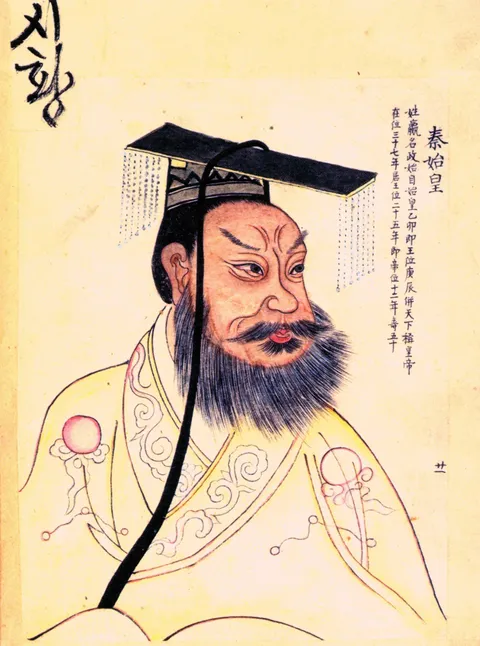
Burning of the Books and Burying of the Scholars
Also called: Burning of books and burying of scholars
In 213 BCE, on the advice of Chancellor Li Si, books other than Qin’s histories and practical manuals were burned; the next year, it is said, more than 460 scholars and magicians accused of slandering the emperor were buried alive at Xianyang.
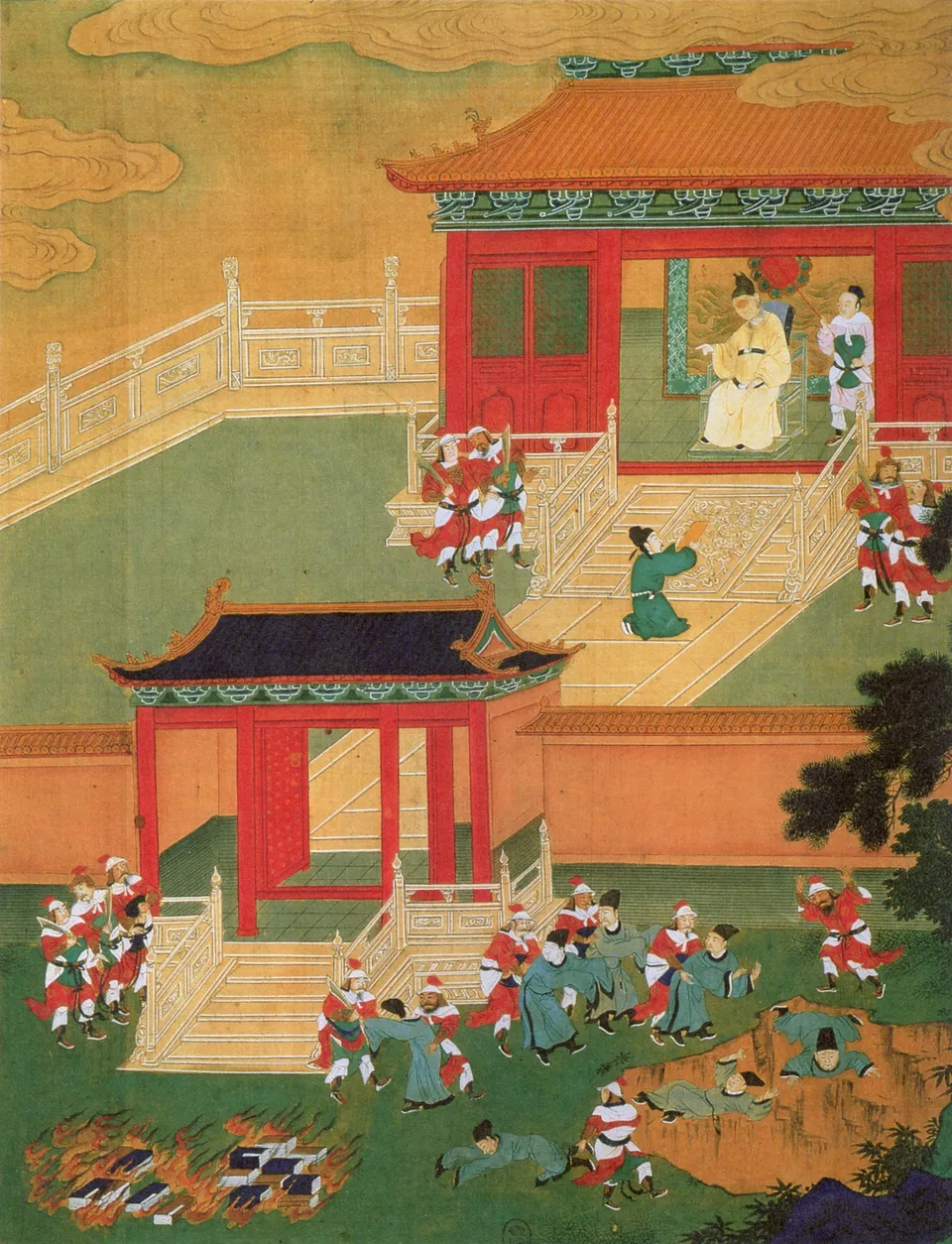
Unknown (18??–18??) · Public domain · Source
At a banquet in Xianyang in 213 BCE a court scholar urged a return to the feudal system of Zhou; Chancellor Li Si retorted that scholars used the past to condemn the present and stir up the people. On Li Si’s advice the First Emperor ordered that histories other than Qin’s, privately held copies of the Book of Songs and Book of Documents and the works of the Hundred Schools be gathered and burned. Books on medicine, divination and agriculture were spared, and those who wished to learn were to take officials as their teachers.
The following year, when the magicians Lu Sheng and Hou Sheng, who had promised the elixir of life, denounced the emperor and fled, he had the scholars of Xianyang investigated and, Sima Qian writes, buried more than 460 of them alive. Some historians hold that many of the victims were magicians rather than Confucian scholars. The eldest son Fusu, who protested, was sent away to the northern frontier with Meng Tian.
The episode became the emblem of Legalist thought control and the first charge in any account of Qin’s harshness. Restoring the classics under the Han from hidden copies and scholars’ memories gave rise to the long dispute between the New Text and Old Text schools.