Meng Tian’s Campaign against the Xiongnu and the Qin Great Wall
Also called: Great Wall of Qin, Great Wall of China
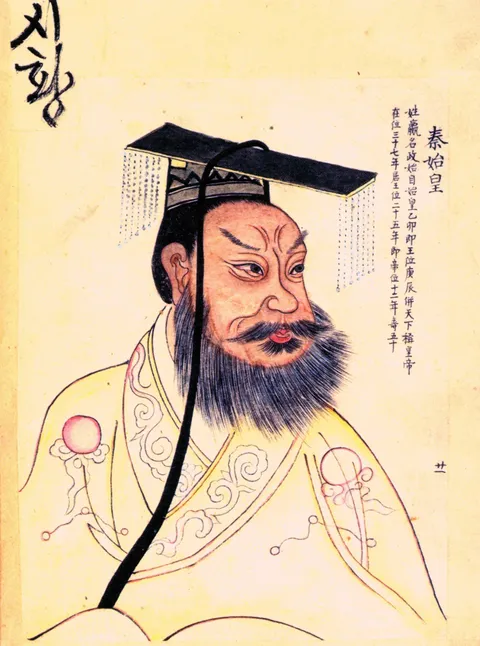
The First Emperor gave General Meng Tian 300,000 men to drive the Xiongnu north and join the old walls of Qin, Zhao and Yan into a wall stretching from Lintao to Liaodong. Most of the Great Wall standing today was rebuilt much later by the Ming.
In the Warring States period the northern states of Qin, Zhao and Yan each built walls against the nomads. In 215 BCE, after unification, the First Emperor sent General Meng Tian with 300,000 men to drive the Xiongnu out of the Ordos, the land within the great northward bend of the Yellow River. Meng Tian then joined up the old walls into a barrier running more than ten thousand li from Lintao (in today’s Gansu) in the west to Liaodong in the east. Remains of Qin’s rammed-earth wall survive in Inner Mongolia and elsewhere.
Alongside the wall a straight military road (the Straight Road) was built from Xianyang to the northern frontier. Countless conscripts died at the work, giving rise to the legend of Meng Jiangnü, whose weeping for her husband brought the wall down. Beyond Liaodong, at the wall’s eastern end, lay Gojoseon; the Weilüe records that its King Bu, fearing a Qin attack, made a show of submission to Qin.
The Han went on using the Qin wall. The brick walls famous today, such as Badaling, were mostly rebuilt by the Ming from the 14th century onward and lie south of the Qin line.