The Capitoline Wolf — Gift of Sixtus IV
Also called: Lupa Capitolina, Capitoline She-wolf
In 1471 Pope Sixtus IV gave a group of bronzes from the Lateran, including a bronze she-wolf, to the Roman people and placed them on the Capitoline Hill — the event the Capitoline Museums count as their beginning. When the wolf was made is disputed between an ancient Etruscan and a medieval date.
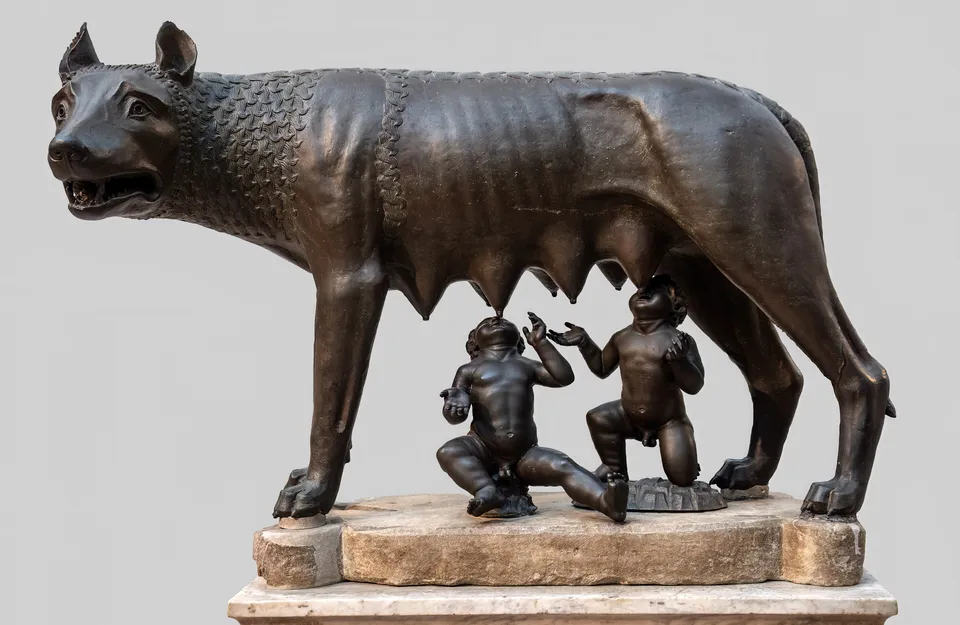
In 1471 Pope Sixtus IV “restored to the Roman people” a group of bronzes from the Lateran Palace and placed them in the Palazzo dei Conservatori on the Capitoline Hill. An inscription recording the gift still survives, and the Capitoline Museums — among the oldest public museums in the world — count it as their beginning. Among the bronzes was the she-wolf (about 75 cm high) that appears to suckle Romulus and Remus. Medieval records mention a wolf in front of the Lateran where justice was dispensed, but whether it was the same statue is uncertain.
The twins beneath the wolf were added in the late 15th century; they are often attributed to the Florentine sculptor Antonio del Pollaiuolo, though this is uncertain. The wolf itself was long thought to be a 5th-century BC work of an Etruscan (or southern Italian) workshop. During restoration in the late 1990s, however, its single-pour casting technique was argued to be medieval, and radiocarbon dating at the University of Salento placed organic residue in the casting core at 1021–1153. Some scholars still defend an ancient date, and the question remains open.
Whatever its date, the wolf with the twins became the emblem of Rome, and copies stand around the world. It is now in the Hall of the She-Wolf in the Palazzo dei Conservatori, Capitoline Museums.