Columbian Exchange
After Columbus’s voyages, crops, livestock, people and germs crossed between the Americas and Afro-Eurasia. Potatoes, maize and chili peppers spread worldwide, while epidemics devastated Indigenous American populations.
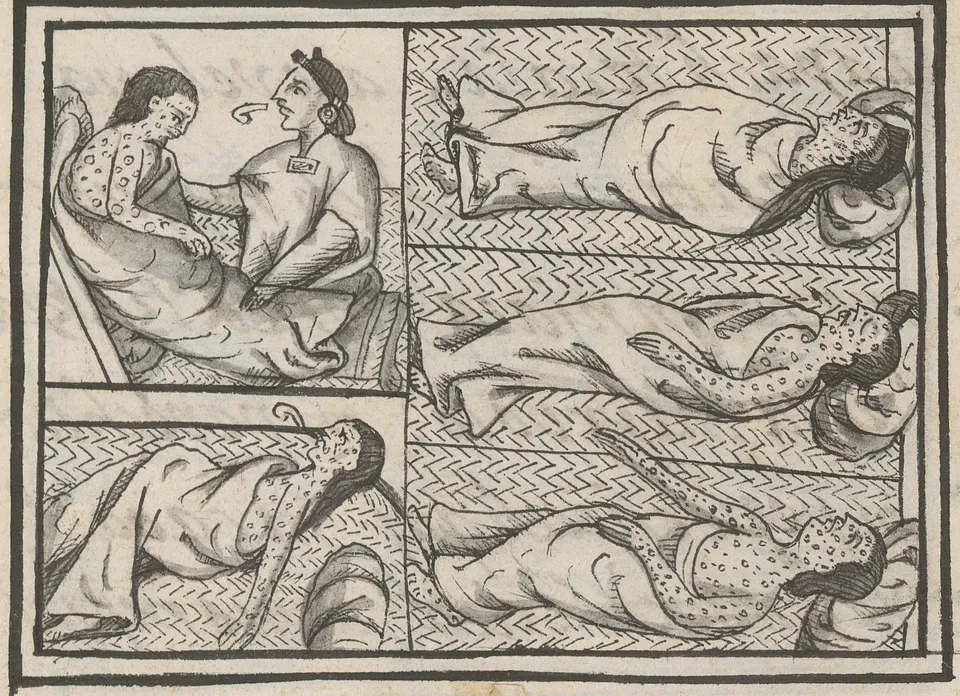
Bernardino de Sahagún. · Public domain · Source
Maize, potatoes, sweet potatoes, chili peppers, tomatoes, tobacco and cacao went from the Americas to Europe, Africa and Asia, transforming diets and populations, while wheat, sugarcane and coffee, horses, cattle and pigs went to the Americas. Smallpox, measles and other diseases swept through Indigenous peoples without immunity, and a large share of the population died in the sixteenth century. To replace the lost labour, the Atlantic slave trade in Africans grew. Korea received chili peppers via Japan in the sixteenth–seventeenth centuries, sweet potatoes from Japan in the eighteenth and potatoes from Manchuria in the early nineteenth. The term "Columbian exchange" was coined by the historian Alfred Crosby in 1972.