Gyeongguk daejeon enacted
The national code begun under Sejo was completed and enforced under Seongjong, becoming the framework of Joseon government.
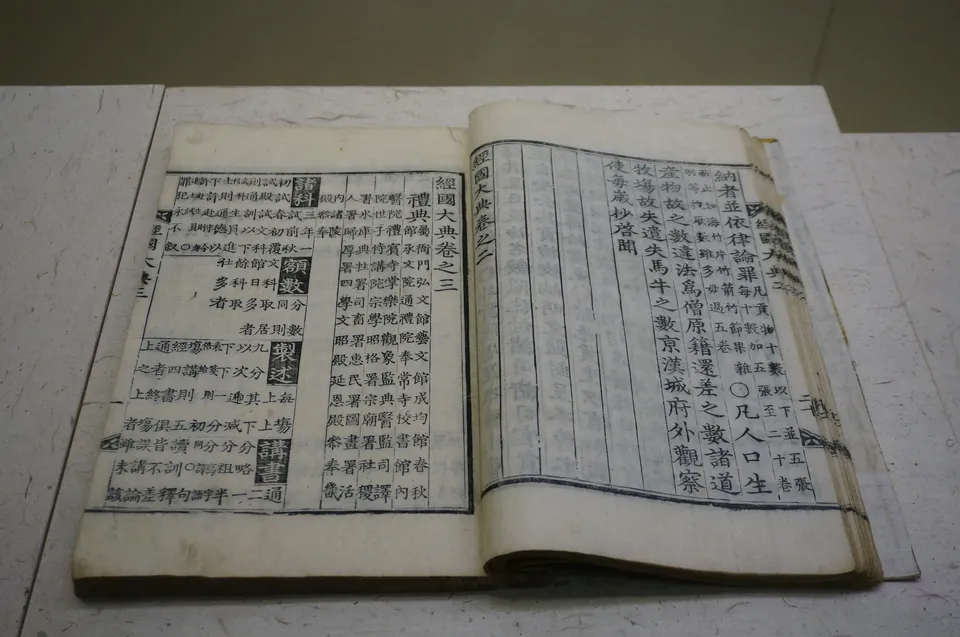
猫猫的日记本 · CC BY-SA 4.0 · Source
Early Joseon had codes such as Jo Jun’s Gyeongje yukjeon, but later decrees and regulations piled up and contradicted one another. Sejo began compiling a single code to stand for all time. The sections on revenue and punishments were finished first, but the whole was not completed in his reign; after revisions under Yejong and Seongjong it took effect in 1485.
Matching the Six Ministries, it was divided into six codes: personnel, revenue, rites, military affairs, punishments and public works. It laid down in law the structure of the state — the State Council and Six Ministries, the eight provinces, the civil service examinations, land and taxation, and social status. It was later supplemented by Yeongjo’s Sok daejeon (1746), Jeongjo’s Daejeon tongpyeon (1785) and the Daejeon hoetong (1865) under the Heungseon Daewongun.